Introduction
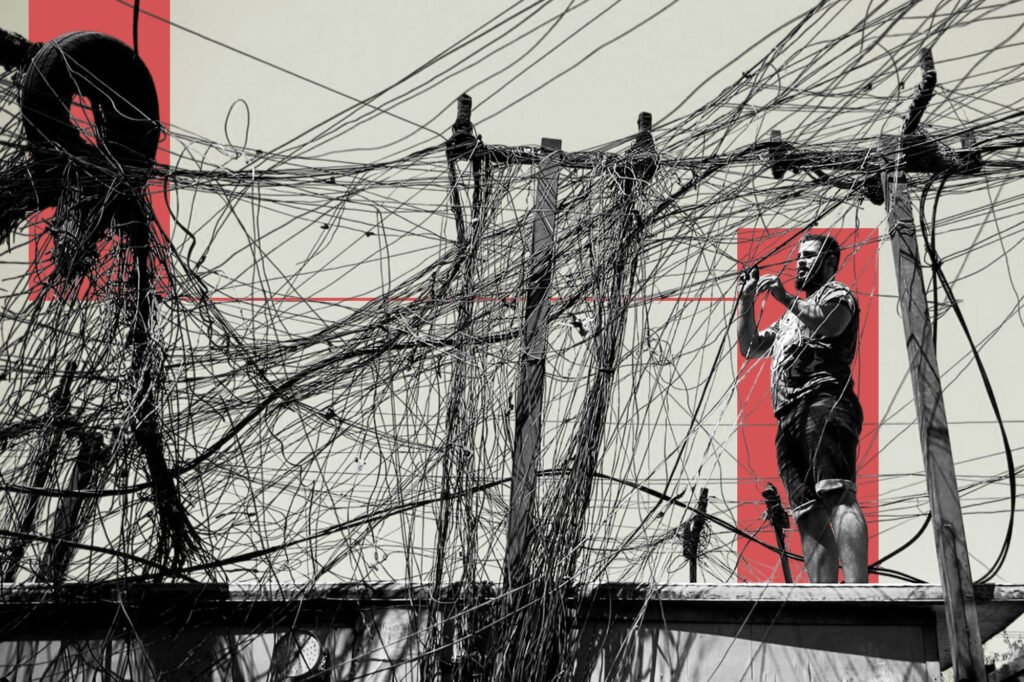
There is no question more frequently asked among us Iraqis than the state of electricity, while the responsible ministry does not even know the actual number of subscribers connected to the national grid, despite an enormous workforce of permanent staff, contractors, and daily wage workers that represents ten times the ministry’s actual need according to international standards.
The path to reform must begin by acknowledging that we need exceptional, practical solutions commensurate with the scale of the problem. These solutions must be entirely different from the conventional, tried-and-tested methods that have produced waste, corruption, and a widening gap between electricity demand and available supply. Therefore, we must prioritize our needs before developing detailed solutions for each department within the ministry, backed by a clear commitment to a time-bound roadmap that achieves a tangible impact in resolving the crisis within a defined timeframe, which I believe should not exceed three years.
Any pledge to resolve the electricity crisis will inevitably be met with cynicism and ridicule due to the chronic nature of this crisis and because the problem has grown more complex year after year. Despite Iraq possessing massive oil and gas reserves, and despite substantial government spending on the electricity sector over the past two decades, supply hours remain well below actual demand, especially during summer, which sees extreme temperature spikes and surging energy demand. This has turned the crisis into a developmental, economic, and political issue, given its direct impact on industry, agriculture, investment, healthcare, and education, alongside its severe social repercussions on citizens’ lives.
The Main Causes of the Electricity Crisis
- The alliance of “incompetence and corruption” is the fundamental driver of the crisis, as the ministry has turned into a funding source for dominant factions controlling this portfolio. Technical factors rank second and can be summarized as follows:
- Weak infrastructure: Manifested in the condition and type of power generation plants, transmission lines, and distribution networks.
- Shortage of suitable fuel: Especially for gas-fired power plants, compounded by import dependency and the obstacle of US sanctions on Iran regarding payment mechanisms for gas purchases.
- Administrative corruption: Inextricably linked to a severe lack of competence in managing the sector.
- Population growth and soaring consumption: The average Iraqi citizen consumes six times more energy than a citizen in neighboring countries such as Egypt or Iran.
- Technical and non-technical (administrative) losses: Manifested in illegal grid encroachments (electricity theft) and weak billing collection, leading to massive financial losses that impair the state’s ability to maintain and expand the system.
Economic and Social Impacts
power outages; its repercussions ripple across all sectors:
- Economically: It causes a slump in industrial output, increases operational costs, and undermines investment attractiveness, particularly in industries reliant on continuous power.
- Socially: It strains citizens’ living standards, forcing households to rely on expensive private neighborhood generators, which adds heavy financial burdens and creates continuous environmental and noise pollution. Hospitals, schools, and public institutions are equally disrupted by outages, severely degrading public service delivery.
Government Efforts to Address the Crisis
Successive Iraqi governments have undertaken several initiatives to address the electricity crisis, most notably:
- 1. Focusing on constructing new power generation plants and rehabilitating existing ones.
- 2. Upgrading transmission and distribution networks.
- 3. Executing electrical interconnection projects with neighboring countries.
- 4. Expanding utility-scale solar energy projects.
- 5. Encouraging domestic and foreign investment in the energy sector.
Despite the significance of these measures, the results remain far below expectations due to persistent technical, administrative, and financial bottlenecks. It is essential to point out the systemic shortcomings of the measures that the Iraqi state has grown accustomed to, all while the deficit between available generation capacity and consumption rates widens year after year. Therefore, the scientific answer must be an integrated solution embodied in the Smart Grid. Any effort or expenditure made without implementing the smart grid is an exercise in futility; proceeding without it is like “trying to fill a tank full of holes.”
To discuss the integrated solution, we must begin with the distribution sector for two primary reasons:
- Because it directly impacts citizens’ daily lives.
- Because it serves as the implementation gateway for the Smart Grid, which delivers the integrated solution.
Additional Reasons Tied to the Distribution Sector:
- It represents the net deliverable to the citizen, who may not understand power engineering terms, but fully understands the number of supply hours received.
- It hosts the core issue of revenue collection and cost recovery for funds spent by the ministry.
- It represents the nexus of maximum waste and technical/administrative losses.
- The integrated solution centers on the smart grid project, originating in the distribution sector and scaling upward to power generation stations.
First: Distribution – The Integrated Solution Project
The Smart Grid leverages digital technology to supply consumers with electricity via digital connectivity. It utilizes a centralized monitoring, analysis, control, and communications architecture to optimize efficiency, lower energy consumption, eliminate non-technical losses (power theft), reduce costs, and achieve maximum transparency and reliability across the entire energy supply chain.
It introduces smart solutions to overcome vulnerabilities in the conventional grid through Smart Meters (an advanced extension of analog metering that enables remote device load management via two-way communication). Given widespread home internet availability, the Smart Grid becomes far more reliable in practice. Grid communication devices transmit real-time telemetry, allowing consumers, operators, and automated systems to respond swiftly to grid fluctuations.
This facilitates active energy management, load profiling, and cost control for individual households and institutions alike, matching demand to available generation capacity. Providing consumers with real-time data on consumption and dynamic pricing helps demand-side management systems curb usage during peak-demand, high-cost periods, typically concentrated in the three summer months from June 15 to September 15.
Furthermore, Smart Grid systems utilize telecommunication technologies such as smart meters and smartphones operating on 4G technology, alongside SCADA (Supervisory Control and Data Acquisition) systems and other advanced telemetry, to gather data across generation, transmission, and consumption nodes, dynamically adjusting network operations accordingly.
Data gathered on consumption profiles (households, factories, etc.) and generation output will enable the seamless integration of distributed renewable energy, such as rooftop solar units, which offer a viable off-grid alternative, unlike utility-scale solar farms operating on-grid. This critical operational data enables total system automation, guaranteeing efficient, reliable, and sustainable power generation and distribution.
Technical Scope of the Smart Grid Project:
- Digitally engaging consumers via connected architectures with automated monitoring, analytics, and control to enhance efficiency, reduce consumption, and eliminate administrative losses and theft.
- Lowering operational costs while achieving maximum transparency and reliability across the energy supply chain.
- Deploying smart meters equipped with two-way communication to upgrade traditional metering and facilitate load control.
- Leveraging telecommunications infrastructure, including 4G-enabled smart devices and SCADA platforms.
- Integrating distributed renewable energy assets, particularly residential rooftop solar installations.
- Full grid automation to ensure the efficiency, reliability, and long-term sustainability of power generation, transmission, and distribution.
Why the Smart Grid is the Fundamental Solution (Simplified for Non-Specialists):
- Guaranteeing a 24/7 continuous electricity supply to subscribers via smart management.
- Curbing excessive consumption: Target a 20% to 30% reduction in consumption during Phase 1, reaching up to 50% upon full project completion.
- Deploying a comprehensive grid protection and asset maintenance platform powered by Geographic Information Systems (GIS).
- Automated demand-side management and dynamic load shedding.
- Ensuring equitable power distribution among all connected consumers.
- Real-time (online) technical detection of illegal grid hookups and energy theft.
- Continuous real-time (online) communication with all smart meters.
- Dual billing capability (prepaid and postpaid), with seamless remote switching between billing modes without replacing meters.
- Remote, dynamic tariff adjustments based on future policy without replacing meters.
- Automatic bottleneck and congestion management across the grid in real time.
- Dynamic grid load balancing and remote fault detection/isolation.
Second: Power Production (Generation)
Regardless of the number of power plants built or the gross megawatts generated, capacity additions alone will never solve the crisis without controlling consumption and cutting waste, an outcome impossible without the Smart Grid.
Core Principle: Without implementing a smart grid, adding generation capacity, drafting strategic plans, or allocating massive budgets is futile; it is akin to trying to fill a tank full of holes.
However, this does not mean halting conventional operational reforms in the generation sector, which can be summarized as follows:
- Converting inefficient and low-output plants into investment opportunities (Operation & Maintenance contracts) as a first phase. This can unlock at least 10,000 MW within a short timeframe not exceeding three years.
- Contracting private operators for select state-owned plants under internationally benchmarked O&M rates, scaling up to the remaining fleet in Phase 2. The ministry’s role should transition strictly into a regulatory and oversight body, given its proven administrative shortcomings over decades.
- Completing Combined-Cycle Gas Turbine (CCGT) projects via direct funding (if fiscal space permits) or direct investment tenders. These must incorporate inlet cooling for simple-cycle units alongside international-standard O&M contracts, delivering over 4,000 MW within 18 to 24 months.
- Immediately launching Waste-to-Energy (WtE) projects and purchasing power from private developers at preferential feed-in tariffs.
- Prioritizing baseload Supercritical Steam Power Plants, given their operational stability, high reliability, and fuel flexibility.
- Establishing a strategic and dependable reserve of Iraqi gas oil (diesel) with mandatory daily inventory reporting to ensure reliable backup fuel for gas turbine plants during peak summer demand.
- Hydroelectric Generation: Restoring the rated design capacity of the Mosul, Haditha, and other hydroelectric dams through rigorous technical overhaul, while negotiating with Turkey to guarantee a minimum transboundary discharge of 500 m³/s along the Tigris River.
- Appointing a special envoy for the Prime Minister to interface directly with the Turkish Presidential Special Representative on water affairs.
- Integrating the generation fleet into the smart grid to monitor actual generation metrics and audit output from Independent Power Producers (IPPs) operating under legacy, non-transparent contracts, specifically long-term “Take or Pay” agreements.
Third: Electricity Transmission
Reforming Iraq’s transmission grid is of paramount urgency; it is significantly less capital-intensive than generation and delivers rapid efficiency gains. Thus, transmission upgrades must proceed in parallel with generation expansion.
Core Transmission Action Plan:
- Implementing a rigorous, scheduled maintenance program for transmission lines and substations, identifying capacity shortfalls.
- Constructing new overhead lines and substations via direct investment models or traditional procurement.
- Reinforcing grid interconnection by installing 400 kV double-circuit lines to evacuate and route available generation capacity, while enhancing inter-provincial links to facilitate bulk wheeling of power between governorates.
- Constructing 132 kV sub-transmission lines to secure intracity power flows and ensure balanced distribution within each governorate.
- Mandating the inclusion of associated evacuation transmission lines in all future power generation investment tenders.
- Improving the Power Factor across grid substations.
- Deploying Smart Grid automation across transmission assets to monitor and dynamically route electrical loads, mitigate transmission losses, and prevent cascading system failures and total blackouts (Grid Shutdowns) during peak periods.
- Expanding regional grid interconnections with neighboring states to reinforce grid stability during peak hours.
Fourth: The Energy Market
To ensure the long-term viability of the electricity sector, a transparent, competitive wholesale and retail energy market must be established to govern power transactions at cost-reflective market rates:
- Enabling Ministry of Electricity subsidiaries to trade power at market-clearing prices across the value chain (Generation -> Transmission -> Distribution), whether dealing with state entities or private operators.
- Mandating distribution utilities to sell power to consumers and purchase surplus power fed back into the grid from residential rooftop solar systems (Net Metering / Feed-in Tariffs).
- Should the government choose to subsidize retail electricity rates, it can subsidize targeted tranches by purchasing power on behalf of eligible citizens, with the Ministry of Finance directly disbursing the tariff delta at wholesale market prices to distribution companies.
Strategic Rationale for Establishing an Energy Market:
- Revealing true cost-of-service figures to the public and highlighting the scale of government subsidies.
- Rationalizing domestic energy consumption.
- Protecting public funds against corrupt and biased IPP contracts.
- Curtailing massive fuel waste and auxiliary network losses.
- Boosting productivity by aligning the performance indicators of management and utility personnel with public interest outcomes.
Key Fiscal and Administrative Measures
- Enacting a “Climate Tax” Law comprising:
- Increasing customs tariffs on conventional, high-consumption air conditioning units.
- Exempting up to two AC units per household from import and sales taxes, while applying a progressive tax on the third and fourth units to safeguard low-income households and ensure equitable subsidy distribution.
- Earmarking these climate tax revenues directly for the Ministry of Electricity as internal development capital.
- Mandating municipal authorities to plant 20 trees per resident in urban areas to mitigate the urban heat island effect and lower ambient temperatures.
- Providing subsidized green financing and loans for homes incorporating certified thermal building insulation. Comprehensive organizational restructuring of the ministry to determine actual manpower needs, with surplus labor redeployed across other civil service departments via Cabinet decree.
The Ministry of Energy: The Core of Structural Reform & The Integrated Solution
Iraq urgently requires structural reforms to revamp its electricity sector, which cannot be solved in isolation from the broader energy ecosystem. The foremost reform is consolidating the fragmented energy portfolio under a unified Ministry of Energy.
No sector in Iraq presents a more vital starting point for reform than energy, as it generates 95% of Iraq’s sovereign fiscal revenues. Continued hesitation, or settling for empty rhetoric at conferences, will only invite further capital waste, missed economic opportunities, and systemic development setbacks across all other sectors.
Energy is the primary engine of the economy; yet, Iraq’s energy sector remains plagued by high-risk procurement practices and exceptional waiver decrees that bypass standard bidding regulations and budgetary execution laws, often under the pretext of limited market competition and single-source contractor monopolies.
Therefore, we must decisively dissolve the Ministry of Oil, Ministry of Electricity, and Ministry of Water Resources, replacing them with an integrated Ministry of Energy established by law.
The proposed Ministry of Energy should encompass:
- The National Oil Company (succeeding the Ministry of Oil).
- The National Electricity Company (succeeding the Ministry of Electricity).
- The National Gas Company (consolidating gas state enterprises currently under the Ministry of Oil).
- The National Water and Dams Management Company (succeeding the Ministry of Water Resources).
- The Iraqi Atomic Energy Commission.
- The Renewable Energy Authority (newly established).
- All remaining state enterprises under the current Ministry of Oil not merged into the entities above.
- An Energy Research Center operating to international standards, specialized in Iraqi and global energy markets and strategic planning. This institution would mirror the U.S. Energy Information Administration (EIA) established in 1977 following the 1970s oil shocks, under the designation: Iraqi Energy Information Administration (IEIA).
Note on Institutional Independence: The U.S. Energy Information Administration (EIA) operates as an independent statistical and analytical agency within the U.S. Department of Energy, serving as the nation’s premier source for objective energy intelligence. By collecting, analyzing, and disseminating data on renewables, petroleum, natural gas, and alternative fuels, the EIA empowers policymakers and markets to make data-driven decisions. To safeguard its analytical integrity and public trust, EIA findings and forecasts are by law exempt from prior approval or modification by any other executive officer or government authority. An equivalent statutory protection should govern Iraq’s IEIA.
Disclaimer: The views and opinions expressed in this paper are solely those of the author and do not necessarily reflect the official policy or position of the Institute.