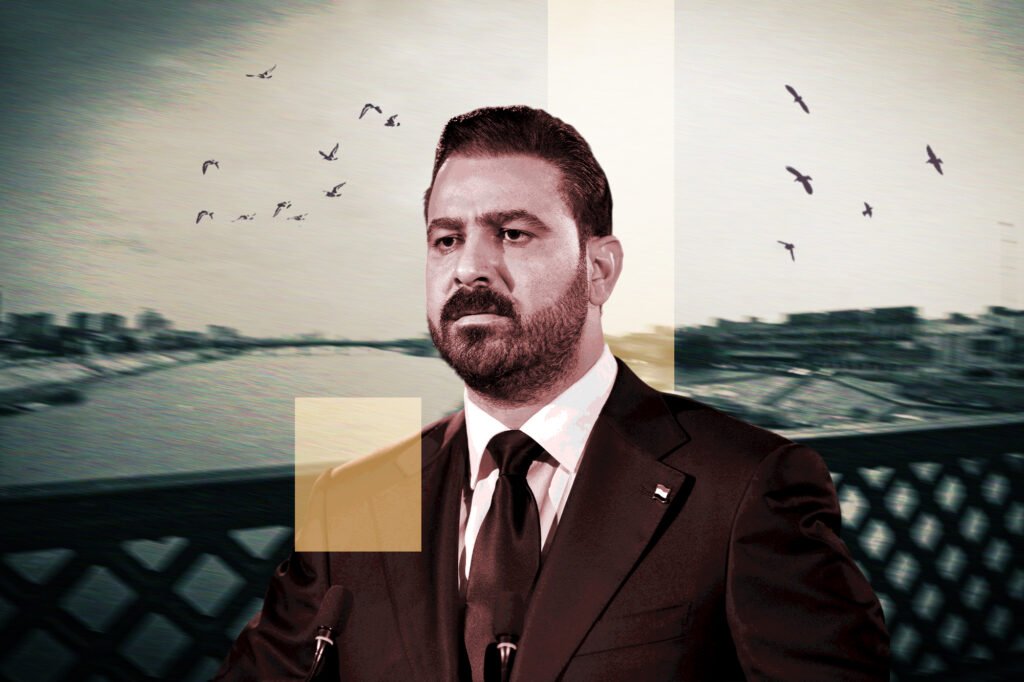
The government of Ali Al-Zaidi assumes its responsibilities at a stage characterized by mounting pressures on public finances and an increasing need for long-term structural reforms. Despite the remarkable economic activity witnessed over the past three years, it was accompanied by a significant expansion in government spending. While this helped stimulate the local market, it failed to remedy the fundamental structural imbalance that has plagued the Iraqi economy for many years. The near-total reliance on oil, the weak contribution of the private sector to production and employment, rising operational expenditures, and the rapidly accelerating domestic debt have become distorted features of this rentier economy.
The Challenging Reality
Macroeconomic performance over the past three years has revealed a set of structural imbalances that have limited the Iraqi economy’s ability to achieve sustainable growth capable of weathering external shocks. These imbalances became most apparent during the Strait of Hormuz disruption crisis, which exposed the sheer volume of reliance on oil revenues and the fragility of the state’s economic and financial infrastructure.
The following is a brief overview of the structural distortions in the Iraqi economy over the past three years:
- First: Continued Over-Reliance on Oil
The Strait of Hormuz disruption crisis demonstrated that the Iraqi economy still relies almost entirely on oil exports to finance the public budget and government spending. The decline in oil exports from 100 million barrels per month to approximately only 10 million barrels led to a sharp drop in public revenues, creating a financing gap estimated at $9.5 billion per month. This reflects the limited contribution of non-oil sectors to revenue generation and national income.
- Second: Expansion of Government Spending Outpacing Sustainable Revenue Growth
Public finances witnessed a massive expansion in annual spending, approaching $100 billion, without a corresponding growth in sustainable revenue sources. This has increased the budget’s sensitivity to oil price fluctuations and raised the risk of a fiscal deficit if oil markets face disruptions or sharp declines.
- Third: Dominance of Operational Expenditures Over the Public Budget
Operational spending accounted for approximately 72% of the total budget due to rising allocations for salaries, pensions, subsidies, and social welfare. This inflation in operational spending has reduced the fiscal space available for productive investment expenditures, limiting the state’s capacity to finance development projects capable of creating value-added and sustainable job opportunities.
- Fourth: Labor Market Reliance on a Bloated Public Sector
The number of public-sector employees increased by approximately 550,000 over three years, reaching approximately 4.55 million employees. Although this expansion helped ease social pressures and curb unemployment in the short term, it has increased long-term financial burdens on the government sector, contrasted by the private sector’s weak capacity to absorb new entrants into the labor market.
- Fifth: Expansion of Long-Term Social Obligations
Social protection and welfare programs expanded significantly, with the number of beneficiaries exceeding 7.6 million people and the cost of social subsidies rising to about 6 trillion dinars annually. Despite the importance of these programs in promoting social stability, their continuous expansion adds growing operational burdens on the public budget and restricts future fiscal policy flexibility.
- Sixth: Increasing Reliance on Domestic Borrowing
Iraq witnessed a clear rise in the volume of domestic debt, with total “new” domestic borrowing during the period from 2023 to April 2026 reaching about 46.035 trillion dinars, while the total outstanding domestic debt stabilized at 96.629 trillion dinars after settling 19.910 trillion dinars of existing obligations. Although Iraq still possesses relatively large cash reserves, the rise of domestic debt at this rate reflects government spending expanding faster than sustainable revenue growth. It also indicates the growing reliance of public finances on local borrowing instruments to bridge financing gaps related to operational and investment obligations.
- Seventh: Limited Economic Diversification and Weak Productive Sectors
Despite the launch of vital projects in the infrastructure and energy sectors, the economy has not witnessed a tangible structural shift in the industrial, agricultural, technological, or non-oil export sectors. Economic activity in trade, services, and contracting remained heavily linked to government spending, limiting its ability to achieve independent and sustainable growth.
- Eighth: Weak Contribution of the Private Sector in Leading Economic Growth
The private sector remains heavily tied to government contracts and public spending, reducing its role in creating real macroeconomic value. It operates almost entirely within the state’s orbit rather than independently, creating a core paradox where the economy appeared to grow, but underneath was merely accumulating financial fragility. Strategically speaking, a contractor living entirely off public tenders does not represent a productive private sector, nor can a company waiting on state allocations drive a new economy. Consequently, Iraq urgently needs an independent private sector active in industry, agriculture, and trade, rather than one revolving around the state.
- Ninth: A Clear Flaw in the Prioritization of Resources
The oil abundance was treated as an opportunity for rapid expansion rather than as an opportunity to build financial buffers and undertake structural reforms. The years of abundance should have been used to reduce reliance on oil, not to deepen it through new obligations. Consequently, the years of high oil prices were not sufficiently invested in building sovereign wealth funds, bolstering long-term financial reserves, or implementing deep economic reforms.
- Tenth: Weak Contribution of Non-Oil Revenues Despite the growth
of non-oil revenues resulting from the development of collection systems, electronic payment systems, and improved collection procedures, their contribution remained limited compared to the scale of public spending. It stayed below the level required to build balanced public finances capable of reducing reliance on oil as a primary source of revenue.
Economic Challenges Facing the Al-Zaidi Government
Consequently, the new Iraqi government, led by Mr. Ali Al-Zaidi, faces a highly complex economic challenge. Iraq is not on the verge of an immediate financial collapse, but it faces mounting pressures related to fiscal sustainability, economic structure, and the future of the labor market.
Liquidity pressures will test the government’s ability to provide the necessary funds to cover salaries, operational expenses, and contractual obligations on time, even if the state possesses significant assets and financial reserves.
Although inflation is under control, there is genuine fear that any exceptional measures to address revenue shortfalls could trigger a new inflationary wave. Any additional liquidity injected into the economy without a real increase in production will inevitably lead to higher prices and erode citizens’ purchasing power.
The rising domestic debt, bloated operational spending, continued reliance on oil, and a weak private sector make the economy highly sensitive to external shocks, whether oil-related, geopolitical, or financial.
Features of the Coming Phase
Therefore, the coming phase requires gradually redirecting the Iraqi economy toward a more sustainable model, moving the state from the logic of “managing abundance” to the logic of “risk management,” especially during the current stage. The Iraqi economy needs a clear program based on fundamental rules:
- No salary expansions without a real increase in production.
- No borrowing without financial returns generated from it.
- No project without transparency.
- No subsidies without eligibility.
- No investment without knowledge transfer and employment for Iraqis.
The broad outlines are defined by the following pillars:
Pillar I: Disciplining Public Finances
It is very natural for the Al-Zaidi government to conduct a comprehensive review of public spending during its first three months in office. This does not mean cutting salaries or harming vulnerable groups, but rather stopping undisciplined expansion, reviewing contracts added in recent years, and preventing double salaries or ghost workers.
A clear ceiling must also be set for the deficit and debt, and borrowing must be banned for financing current expenditures. Borrowing should only be linked to projects with a clear economic return; using loans to fund salaries is a dangerous path that leads to a deeper crisis. In this context, the restructuring of certain state-owned assets with productive activity or transferring their ownership to settle part of their accumulated financial obligations is being considered.
Pillar II: Restructuring Social Welfare
The social welfare system must transition from an open-ended spending valve to a smart protection system based on a unified database. This database should link national ID cards with income, real estate, salaries, taxes, and banks to protect eligible citizens living in poverty while removing those who do not qualify.
Within this framework, a portion of welfare programs should be converted into activation programs, allowing anyone capable of working to receive support conditional on training, vocational education, or integration into the labor market. The focus here should not be on reducing protection, but on preventing it from turning into permanent dependency on the state.
Pillar III: Achieving a Revolution in Non-Oil Revenues
The pursuit of gradually raising non-oil revenues must reach levels that cover a significant portion of current expenditures. Achieving this requires a national strategy to maximize revenues across most non-oil sectors, such as fully automating customs, linking border crossings to a centralized platform, eliminating unjustified exemptions, expanding electronic payments, and implementing a fair and efficient tax system. This system must differentiate between large, high-profit activities and small and medium-sized economic enterprises. Tax reform must curb evasion, which costs the state billions of dollars. Over the past decade, the cumulative average contribution of tax revenues stood at 4.5% of total budget revenues, whereas the expected collection should be 20% of the Gross Domestic Product (GDP).
Pillar IV: Converting Infrastructure Projects into a Productive Economy
Projects that have achieved high completion rates must be finalized and integrated into the economic plan. As for new projects, they should not be approved without a feasibility study, a transparent tender process, and a clear cost ceiling. Infrastructure development is not an end in itself; its true value is derived from lowering production costs, connecting to markets, creating jobs, and attracting actual investments.
Pillar V: Energy as a Foundation for Economic Transformation
The energy sector is the backbone of the Iraqi economy and must sit at the heart of the new government’s economic program. There can be no industrial transformation without reliable electricity, utilized gas resources, and efficient energy networks. Therefore, priority must be given to investing in associated gas, completing electrical grid interconnections, and expanding solar energy investments to reduce the cost of importing electricity and gas for power generation, which drains billions of dollars from the budget annually. Utility collection must also be gradually reformed while protecting low-income groups, making capable citizens pay for the service.
Pillar VI: Encouraging the Productive Private Sector
The new government must grant incentive advantages to the productive private sector, reducing red tape and bureaucracy in company registration procedures and protecting investors from administrative and security extortion. Any exemption or privilege must be tied to hiring Iraqi labor, transferring knowledge, and localizing production. This requires not only establishing industrial zones equipped with electricity, gas, and services, but also setting up a loan guarantee fund for small and medium-sized enterprises (SMEs) and allocating a portion of government procurement to productive Iraqi companies.
Pillar VII: Reforming Banks
A private sector cannot be built without banks capable of financing. Therefore, major state-owned banks must be restructured, banking decisions must be separated from political influence, and credit must be shifted from financing consumption and contracts to financing production. Serious private banks must also be supported, oversight on transfers tightened, and financing tools for SMEs developed.
Pillar VIII: Combating Corruption through Contracts
Awarding projects to companies without a real execution track record must be stopped, and conflicts of interest among officials, contractors, and political financiers must be prevented. Therefore, contracting methods must change: major contracts must be published, ultimate beneficial owners of companies declared, and a unified electronic platform for tenders adopted. Additionally, project costs must be compared locally and regionally to fight corruption and limit opportunities for its occurrence.
Iraq’s economic experience over the past three years has proven that increasing spending and launching projects can stimulate the economy in the short term, but it is not enough on its own to build a sustainable economy. This cannot be achieved solely through expansionary budgets or an increased number of projects, but rather by diversifying the productive base and enhancing sustainable revenues, while reducing oil dependency and shifting economic growth from spending-driven growth to production- and real investment-driven growth.
Pillar IX: Shifting from Line-Item Budgeting to Program and Performance Budgeting
Program and performance budgeting represents one of the most critical structural reforms the Al-Zaidi government can adopt. Instead of allocating resources according to traditional line items, they should be linked to measurable economic goals, such as increasing non-oil revenues, supporting the private sector, or creating jobs. Through this, the Al-Zaidi government will be able to direct resources toward activities with the highest returns, promoting transparency and accountability by evaluating institutional performance based on results achieved rather than the volume of spending. This will serve as a practical tool for the gradual transition from a rentier economy to a more productive and diversified development economy.
Pillar X: Leveraging Regional and International Relations for Development and Diversification Goals
The success of the Al-Zaidi government’s economic program depends not only on internal structural reforms but also on its ability to balance Iraq’s international relations and exploit its strategic location to turn it into a regional hub for trade, transport, and investment. Therefore, strengthening economic diplomacy and concluding trade and investment agreements with regional and international partners must be at the core of the new government’s focus, in cooperation with the Ministry of Foreign Affairs, to attract qualitative investments and expand non-oil exports. Several strategic projects are considered important opportunities for the region, such as the Development Road, energy infrastructure, and logistical and industrial zones. Consequently, foreign relations become an effective economic tool supporting the diversification of income sources, reducing dependence on oil, and promoting sustainable growth.
The Roadmap
In confronting the challenge of a sharp decline in public revenues, the Al-Zaidi government has reportedly begun studying a set of fiscal and monetary options aimed at containing the pressures resulting from falling oil revenues. During its first few weeks, the government reportedly reached an agreement with the regional government and oil companies operating in Iraq to resume oil exports from Kurdistan fields. This step secured exports that could reach up to 770,000 barrels per day, forming a vital financial resource amid the ongoing closure of the Strait of Hormuz.
In addition, there are serious discussions regarding the intention to raise the dollar-to-dinar exchange rate as one of the options providing the government with additional revenue. Conversely, this option will have direct impacts on the prices of imported goods, on which the Iraqi market relies heavily. Unless accompanied by protection for low-income and vulnerable groups, it could lead to higher inflation rates, increased living costs, and a decline in real household income. Therefore, resorting to exchange rate adjustments should not be the first option; it should only be taken after exhausting other tools as part of a comprehensive economic reform program, rather than a mere means to plug a temporary deficit.
The issuance of government bonds is one of the quick financing methods, but it is unsuitable as a long-term tool, especially regarding how borrowed funds might be used to cover operational expenses instead of financing productive projects.
Furthermore, it appears that the Al-Zaidi government is moving forward with recovering state funds lost to corruption, which are estimated in several international reports to be at least $150 billion.
The Al-Zaidi government is also betting on increasing foreign direct investment in Iraq by an estimated $50 billion. However, this task will not be easy, especially since the global economy suffers from high uncertainty and capital owners have become more selective and stringent than ever before. Here, the Al-Zaidi government must consider the guarantees it will offer to investors, the laws protecting them, and providing opportunities that achieve feasible economic returns to generate a good amount of liquidity and move the stalled wheels of the economy.
While these measures may help alleviate some pressures, they will not be enough to bridge the large and sudden financial gap caused by the revenue shortfall. Therefore, rearranging fiscal priorities—such as freezing or postponing non-urgent projects in favor of securing salaries, basic services, security, and energy—could be a vital step capable of saving billions of dollars without needing additional borrowing or taking monetary measures that could destabilize economic stability.
The Al-Zaidi government is also deliberating the sale of old, exhausted public enterprises under the pressure of the crisis, which may offer an opportunity to improve the efficiency of other institutions and ease the heavy burden on the budget. This must be done within a clear and transparent economic framework based on a real valuation of assets, avoiding selling them below their actual value due to immediate financial pressures. To avoid rapid privatization, the government can adopt an “asset monetization” model by granting operating rights, partnerships, or long-term investments in certain unutilized assets, preventing the state from losing a large portion of its assets’ true value.
The quick fixes sought by the Al-Zaidi government require pursuing multiple pathways simultaneously. The first pathway is economic, requiring coordination among all ministries and institutions to prioritize spending and follow a productive rationalization plan, in addition to capitalizing on non-oil revenues. The second pathway is political, requiring Iraqi-Iraqi cooperation and coordination to resolve domestic political crises, alongside regional cooperation led by a team of experts capable of convincing international partners of the need to provide urgent support to Iraq and invest in its vast and promising market.
The success of the Al-Zaidi government depends not only on its ability to find a quick solution to the liquidity crisis, but on its capacity to transform the current crisis from a financial shock into an opportunity to restructure the entire economic model and break the historic cycle of the rentier economy.
- Iraqi Ministry of Finance, Public Debt Department, Financial Status of Domestic and Foreign Debt until April 30, 2026.
- Central Bank of Iraq.
- Ministry of Labor and Social Affairs.