Abstract
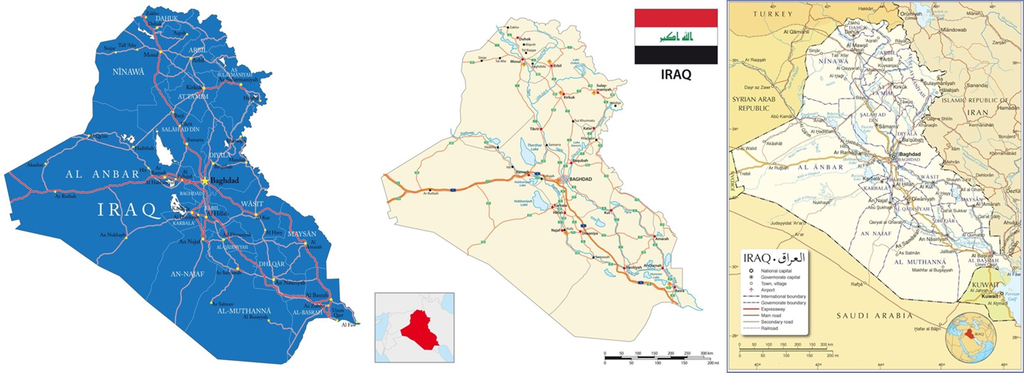
At present, Iraqi cities face accumulated urban, social, and economic challenges resulting from decades of wars and conflicts, political instability, weak urban management, unregulated urban expansion, as well as rapid population growth, internal migration, and economic changes. These factors have been reflected in the declining efficiency of cities in performing their basic functions, increased pressure on infrastructure and public services, the proliferation of informal settlements, rising rates of poverty and unemployment, the degradation of the urban environment, and a weak capacity to attract investments and achieve sustainable development.
This research aims to provide a comprehensive analytical reading of the reality of Iraqi cities from an urban, social, and economic perspective, while diagnosing the most prominent problems they face, analyzing their causes and impacts, and arriving at a proposed reform vision based on the principles of good governance and sustainable urban planning, in line with the United Nations Sustainable Development Goals, particularly Goal 11 on making cities inclusive, safe, resilient, and sustainable.
The research concludes that the crisis of Iraqi cities is not merely an urban or service-related crisis, but rather a crisis of urban management and development policies that requires rebuilding the planning and local administration system, updating legislation, enhancing investment, and adopting a national urban policy that ensures the achievement of balanced development among various Iraqi cities.
Introduction
Cities represent the primary engine of economic, social, and cultural development in all countries of the world, as they attract economic activities, provide employment opportunities, host educational, health, and cultural institutions, and constitute centers of decision-making and administration. International estimates indicate that more than half of the world’s population currently lives in cities, and urbanization rates are expected to continue rising during the coming decades, making sustainable urban management one of the most critical challenges facing governments in the twenty-first century.
Iraq is considered one of the oldest cradles of urban civilization in history, where its land witnessed the emergence of the first organized cities, such as Ur, Uruk, Babylon, and Nineveh. These cities contributed to laying the foundational cornerstones of urban planning and civil administration, influencing the evolution of human civilizations across thousands of years. Furthermore, since its founding in the eighth century CE, Baghdad has played a pivotal role as one of the most important global capitals and a center for science, trade, and culture.
However, contemporary Iraqi cities have undergone profound transformations over the past four decades as a result of successive wars, economic sanctions, political instability, declining public investment, institutional weakness, and increasing demographic pressures. Combined, these factors led to the decline in the efficiency of the urban environment and the emergence of structural imbalances in the systems of housing, transport, services, and infrastructure, as well as the widening gap between population growth and the capacity of cities to meet the needs of the population.
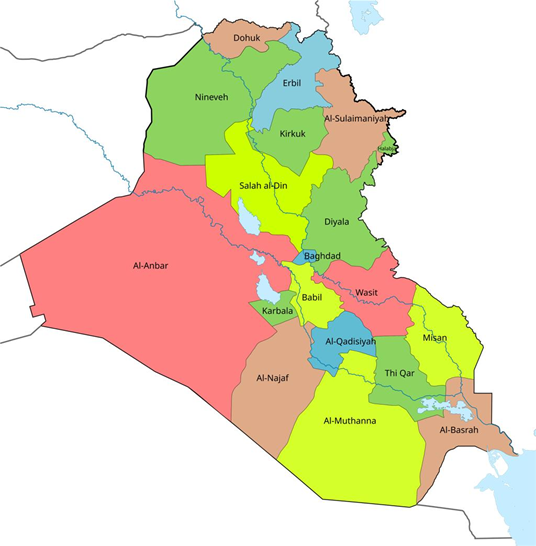
Internal migration, displacement resulting from armed conflicts, and climate changes have also contributed to increasing pressure on major cities, particularly Baghdad, Basra, Mosul, Najaf, Karbala, and Erbil. This led to the expansion of informal areas, rising demand for basic services, and the aggravation of problems of unemployment, poverty, environmental pollution, and traffic congestion. At the same time, urban policies failed to keep pace with these transformations due to weak strategic planning, the multiplicity of entities responsible for city management, the absence of institutional coordination, and the obsolescence of many master plans without being updated in line with demographic and economic changes.
Accordingly, this study comes to analyze the reality of Iraqi cities from a comprehensive perspective combining urban, social, and economic dimensions, proceeding from the hypothesis that the challenges facing Iraqi cities are interconnected and cannot be addressed through sectoral or partial solutions, but rather require an integrated national vision for urban management and sustainable development.
The research seeks to answer a number of key questions, most notably:
- What are the most prominent urban challenges facing Iraqi cities?
- How do social and economic problems affect the efficiency and sustainability of cities?
- What are the shortcomings in the urban management and urban planning system?
- What policies and reforms are required to build Iraqi cities that are more sustainable and capable of meeting the needs of the population?
The importance of this study stems from the increasing need to reconsider urban policies in Iraq in light of continued population growth, urban expansion, and environmental and economic challenges, thereby contributing to supporting decision-makers and policy formulators and enhancing the ability of Iraqi cities to achieve balanced and sustainable urban development.
Urbanization and the Evolution of Iraqi Cities
Urbanization in Iraq: A Historical Overview
Iraq is considered one of the oldest cradles of urban civilization in the world, as its territory witnessed the emergence of the first organized cities since the fourth millennium BCE, such as Ur, Uruk, Lagash, Nippur, Babylon, and Nineveh. These cities established the principles of urban planning and civil administration, linking spatial organization, economic activity, and political governance. These cities were distinguished by the presence of street networks, advanced water distribution systems, specialized residential quarters, defensive walls, and religious and commercial centers, making them an early model of the integrated city.In the Islamic era, Baghdad reached the peak of its urban prosperity after its founding in 762 CE, as its circular design represented one of the most prominent achievements in the history of urban planning, transforming into a global center of science, culture, and trade. Cities such as Basra, Mosul, Kufa, Najaf, and Karbala also witnessed an urban development reflecting their religious, commercial, or administrative specificities.
In the Islamic era, Baghdad reached the peak of its urban prosperity after its founding in 762 CE, as its circular design represented one of the most prominent achievements in the history of urban planning, transforming into a global center of science, culture, and trade. Cities such as Basra, Mosul, Kufa, Najaf, and Karbala also witnessed an urban development reflecting their religious, commercial, or administrative specificities.
During the twentieth century, Iraqi cities entered a new phase of modernization, particularly after the establishment of the modern Iraqi state in 1921, where the first master plans for cities were prepared, and Baghdad, Basra, and Mosul witnessed gradual urban expansion. The oil boom in the 1970s contributed to the implementation of housing, infrastructure, road networks, and public facility projects, enhancing the cities’ capacity to absorb population growth and improve service levels.
However, this developmental trajectory suffered successive setbacks since the 1980s as a result of wars, economic sanctions, and political instability. This led to a decline in investment in urban development, infrastructure degradation, the absence of periodic maintenance, and an increasing gap between population growth and institutional capacity to manage cities.
Demographic Transition and Accelerated Urbanization
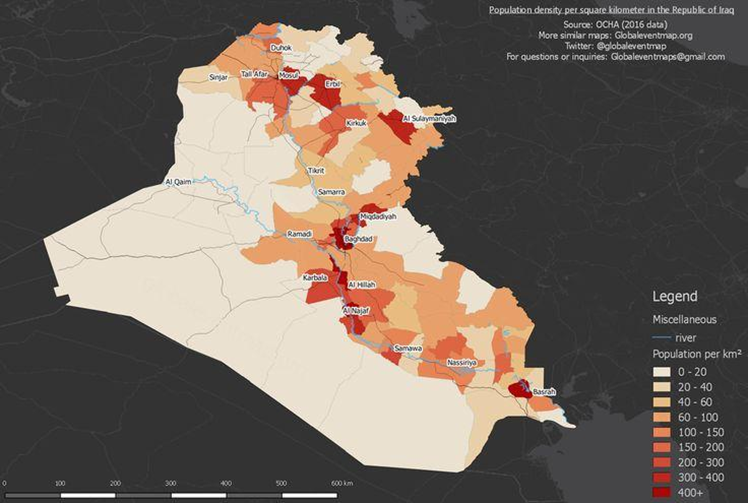
Over the last five decades, Iraq witnessed rapid population growth accompanied by a steady increase in the percentage of population residing in cities. High rates of natural growth, alongside rural migration and forced displacement resulting from armed conflicts, contributed to increasing population density within major cities, particularly Baghdad, Basra, Mosul, Erbil, Najaf, and Karbala.
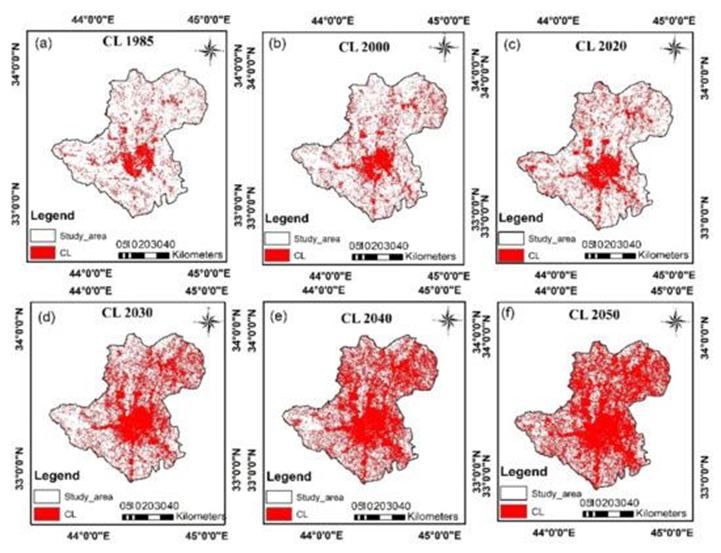
This transformation led to a change in the nature of Iraqi cities, shifting from medium-sized cities to massive urban agglomerations that frequently exceed the design capacity of road networks, water, sewage, electricity, and health and educational services. It also led to rapid urban expansion that largely occurred outside the framework of master plans, generating patterns of unregulated and informal growth.
Among the most prominent characteristics of urbanization in Iraq during recent decades are:
- Concentration of population and economic activities in a limited number of major cities.
- Continuation of rural-to-urban migration due to the decline of agricultural activity and employment opportunities.
- Expansion of residential suburbs at the expense of agricultural lands.
- High population densities in city centers.
- Growing developmental disparities among governorates.
These trends have contributed to increasing pressures on local administration, raised the cost of providing public services, and weakened the capacity of municipalities to respond to the growing needs of the population.
Economic Transformations and Their Impact on City Growth
The development of Iraqi cities has been closely linked to the national economy, which relied increasingly on oil revenues since the 1970s. The financial abundance at the time contributed to expanding government spending on housing, infrastructure, and public facilities; however, this growth remained dependent on public spending rather than diversifying the economic base of cities.
With the Iraqi economy exposed to recurrent crises, the state’s capacity to invest in urban development declined, while cities continued to receive increasing numbers of inhabitants without a parallel expansion in services or job opportunities. This led to the emergence of the informal urban economy, the proliferation of low-productivity economic activities, and an increased reliance on government jobs as the primary source of income, weakening the ability of cities to achieve sustainable economic growth.
Moreover, the absence of balanced spatial policies led to the concentration of investments and services in a limited number of cities, while intermediate and small cities continued to suffer from weak economic development, increasing internal migration and deepening regional disparities.
Urban Planning Challenges
The master plans of Iraqi cities were supposed to keep pace with demographic and economic transformations; however, many of them were not updated periodically or were not implemented as originally designed. This resulted in unregulated urban expansion, widespread changes in land use, and weak control over urban growth.
The institutions responsible for urban planning also faced multiple challenges, most notably:
- Multiplicity of entities related to city management without a unified reference authority.
- Weak coordination between urban planning and economic planning.
- Limited updated urban databases.
- Shortage of specialized personnel in some governorates.
- Weak enforcement of land-use legislation.
- Absence of community participation in preparing urban plans.
As a result, urban development in many cities became driven by demographic pressures and immediate needs rather than guided by long-term planning visions.
Urban Problems in Iraqi Cities
Urban problems in Iraqi cities constitute a direct result of accumulated planning and management imbalances over past decades, alongside the impact of wars, rapid population growth, internal migration, and weak infrastructure investment. These problems are no longer isolated from one another; rather, they represent an interconnected system where deficiencies in one sector exacerbate problems in other sectors. This chapter reviews the most prominent urban challenges facing Iraqi cities.
Housing Crisis and Unregulated Urban Expansion
The housing crisis is one of the most pressing urban challenges in Iraq, as official indicators indicate a substantial deficit in housing units that increases annually due to population growth and the formation of new households. This deficit has led to inflated land prices, real estate values, and rents beyond the capacity of a broad segment of citizens.
This crisis is attributed to a set of reasons, most importantly:
- Limited annual production of housing units compared to demand.
- Complex procedures for land allocation and registration.
- Weak real estate financing and the absence of long-term housing policies.
- Limited participation of the private sector in affordable housing.
- Absence of an integrated national housing policy.
This resulted in unregulated urban expansion, the spread of individual construction on the outskirts of cities, and the conversion of agricultural lands into residential uses, distorting the spatial structure of cities and increasing the cost of delivering basic services.
Proliferation of Informal Settlements
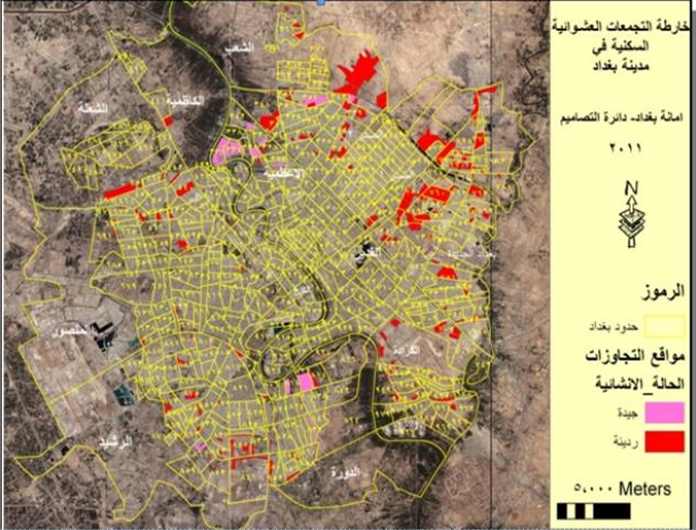
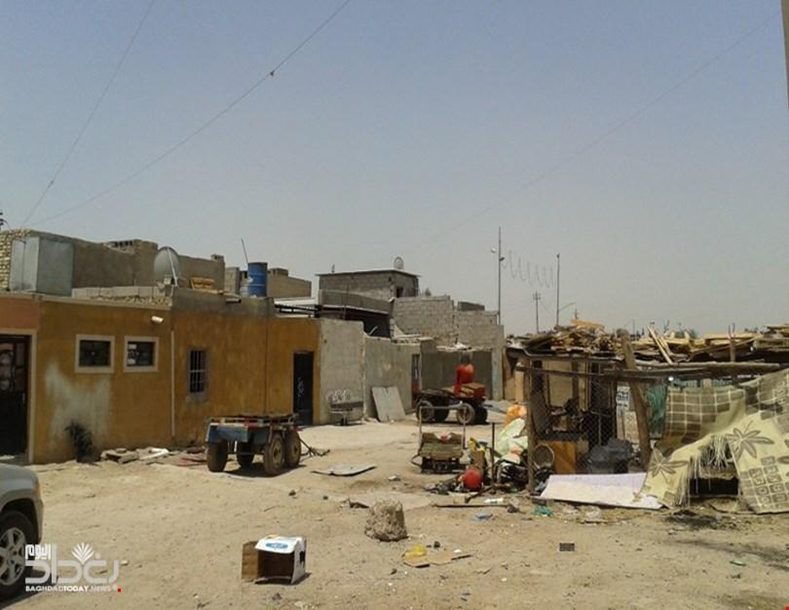
Informal settlements represent one of the most prominent manifestations of urban imbalance in Iraq. Most major cities have witnessed a remarkable expansion of irregular residential areas, whether on state-owned lands, agricultural lands, or sites unsuitable for construction.
Informal settlements do not merely reflect a housing crisis, but also reveal the shortcomings of the urban planning system in responding to the increasing demand for housing. These areas often lack water, sewage, electricity, and road networks, as well as health and educational services; they also suffer from high population densities, poor building quality, and elevated levels of pollution.
The continued expansion of informal settlements not only increases the cost of their future rehabilitation, but also perpetuates patterns of social exclusion and inequality, and weakens the ability of local authorities to manage the city efficiently.
Infrastructure Degradation and Urban Service Deficits
Most Iraqi cities suffer from the aging of infrastructure networks, a large part of which was established several decades ago and has not undergone development or maintenance commensurate with population and urban growth.
Prominent shortcomings include:
- Weak drinking water networks and high loss rates.
- Aging of sewage and stormwater drainage networks.
- Frequent power outages.
- Deterioration of roads and bridges.
- Limited telecommunications networks and digital services in some cities.
This reality led to a decline in the level of urban services, high operating and maintenance costs, increased suffering of citizens, and a reduction in the attractiveness of cities for local and foreign investment.
Transport Crisis and Traffic Congestion
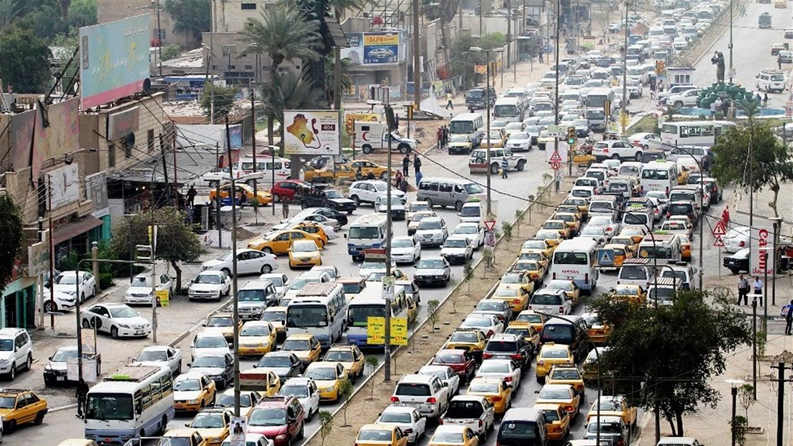
The urban transport problem represents one of the most complex issues in Iraqi cities, particularly in Baghdad, which hosts the largest population concentration in the country. The number of vehicles has increased significantly over the past two decades, while road networks and public transport systems have not witnessed parallel development.
The primary causes of the crisis are represented in:
- Near-total reliance on private vehicles.
- Absence of modern mass transit networks such as the metro or urban trains.
- Weak public bus services.
- Limited traffic planning and intersection management.
- Unplanned urban expansion that increased commuting distances.
The impacts of traffic congestion are not limited to wasting time and increasing fuel consumption; they extend to lower economic productivity, higher pollution rates, increased traffic accidents, and a decline in the quality of life in cities.
Urban Environmental Degradation
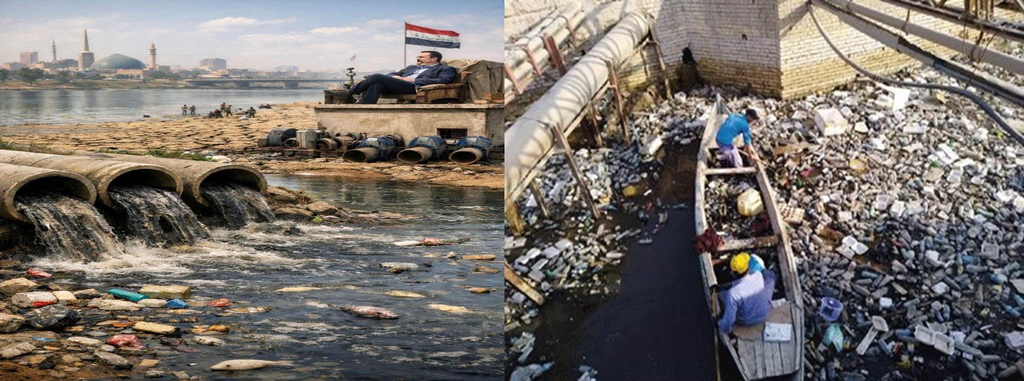
Iraqi cities suffer from increasing environmental pressures resulting from weak environmental management, high pollution rates, unregulated urban expansion, and climate changes.
The prominent challenges are:
- Air pollution resulting from vehicles, electrical generators, and industrial activities.
- Pollution of rivers and waterways due to the discharge of untreated wastewater.
- Weak solid waste management and recycling.
- Decline of green spaces.
- Increase in the phenomenon of urban heat islands within cities.
These problems directly affect public health, raise healthcare costs, and reduce the attractiveness of cities as places to live and invest.
Decline of Architectural Identity and Loss of Urban Heritage
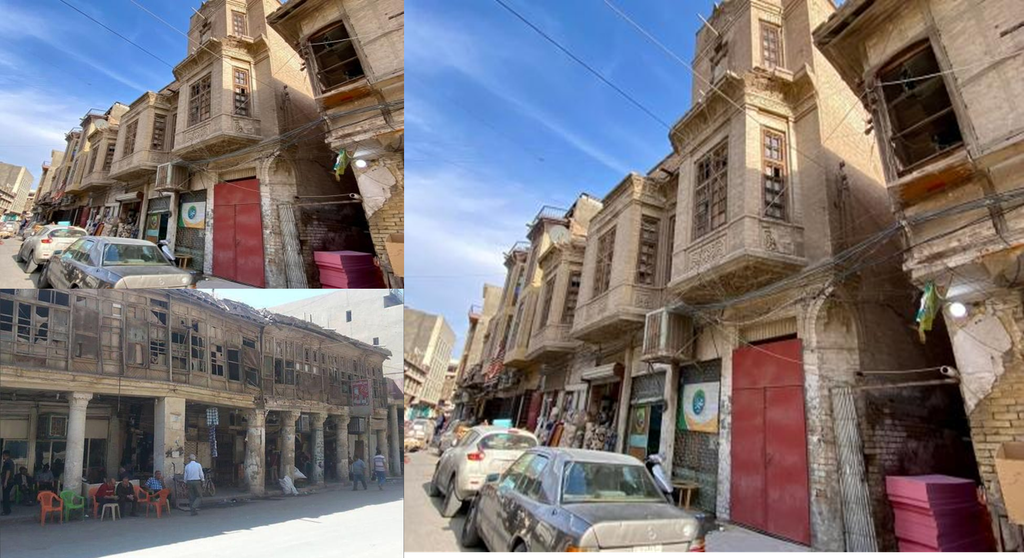
Iraqi cities possess a unique urban and cultural heritage; however, extensive parts of this heritage have been exposed to neglect, destruction, or unstudied alteration. Many cities have lost part of their architectural character as a result of the spread of buildings that are incompatible with the historical context, the absence of design controls, and the replacement of heritage buildings with modern ones without regard for their cultural value.
The importance of preserving urban heritage is not limited to the cultural aspect; it also represents an economic resource that can be invested in stimulating cultural tourism, strengthening the local economy, and consolidating national identity.
Weakness of Urban GovernanceThe researcher believes that the weakness of urban governance represents the most influential challenge in Iraqi cities, because it constitutes the framework within which most other problems are generated. Urban management still suffers from overlapping powers among institutions, the multiplicity of entities responsible for planning and implementation, and weak coordination among them, as well as the limited reliance on data and indicators in decision-making.
Moreover, the absence of a clear national urban policy, weak updating of legislation, and the lack of community participation in decision-making are all factors that led to lower efficiency in city management and the adoption of immediate solutions instead of long-term strategic planning.
Reforming urban governance should be the starting point for any national program to reform Iraqi cities, because the success of housing, transport, or infrastructure projects will remain limited unless accompanied by institutional and legislative reform that enhances integration between planning, implementation, and follow-up.
Social and Economic Dimensions of the Urban Crisis in Iraqi Cities
Urban problems in Iraqi cities are not limited to physical deterioration or infrastructure weakness; rather, their impacts extend to the social and economic structure of urban society. The city represents a space in which economic activities, social relations, and service institutions interact, and any defect in one of these components is directly reflected in the remaining components. Hence, understanding the urban crisis in Iraq requires analyzing its social and economic dimensions as an integral part of the urban development process.
Urban Poverty and the Widening Social Gap
During the past two decades, Iraqi cities have witnessed an increase in manifestations of urban poverty as a result of declining economic activity, weak job opportunities, high living costs, and the inability of public services to keep pace with population growth. Poverty is no longer confined to the peripheries or rural areas; it has become a tangible phenomenon within the cities themselves, where modern neighborhoods exist adjacent to areas suffering from acute shortages in services and job opportunities.
This led to widening the social gap between high-income neighborhoods and less fortunate areas, creating patterns of spatial and social disparity that affect educational opportunities, access to healthcare, quality of housing, and accessibility to public services. The continuation of this gap leads to weakening social cohesion and reducing opportunities for balanced development.
Unemployment and Weakness of the Urban Economy
Iraqi cities suffer from relatively high rates of unemployment, particularly among youth and university graduates, in light of a limited private sector and the economy’s heavy reliance on government employment. This resulted in a decreased ability of cities to create productive and sustainable job opportunities, and an increased reliance on public sector jobs and informal economic activities.
This challenge increases with rapid population growth, as large numbers of youth enter the labor market annually without being met by a parallel expansion in productive or service sectors. Furthermore, weak investment in manufacturing industries, the knowledge economy, and innovation limits the ability of cities to diversify their economy and raise productivity.
Unemployment is directly reflected in social stability, as it is linked to rising rates of poverty, internal and external migration, and a weakened sense of belonging to the place, in addition to increasing the chances of involvement in the informal economy or certain illicit activities.
Internal Migration and Pressure on Cities
Iraqi cities suffer from relatively high rates of unemployment, particularly among youth and university graduates, in light of a limited private sector and the economy’s heavy reliance on government employment. This resulted in a decreased ability of cities to create productive and sustainable job opportunities, and an increased reliance on public sector jobs and informal economic activities.
This challenge increases with rapid population growth, as large numbers of youth enter the labor market annually without being met by a parallel expansion in productive or service sectors. Furthermore, weak investment in manufacturing industries, the knowledge economy, and innovation limits the ability of cities to diversify their economy and raise productivity.
Unemployment is directly reflected in social stability, as it is linked to rising rates of poverty, internal and external migration, and a weakened sense of belonging to the place, in addition to increasing the chances of involvement in the informal economy or certain illicit activities.
Decline in the Quality of Social Services
Educational, health, cultural, sports, and recreational services represent one of the primary indicators of cities’ success in achieving human development. However, many Iraqi cities face clear challenges in this field as a result of aging service infrastructure, increasing numbers of beneficiaries, and weak investment spending.
In the education sector, some cities suffer from a shortage of school buildings and high classroom density, while health institutions face increasing pressure due to population growth and uneven distribution of services. Cities also suffer from limited public spaces, parks, and cultural and sports facilities, which is reflected in the quality of life, particularly for youth and children.
International experiences confirm that investing in social services is no less important than investing in roads or buildings, as it contributes to building human capital and enhances long-term social and economic stability.
The Informal Economy and Urban Investment Challenges
Weak economic growth and high unemployment have led to the expansion of the informal economy in most Iraqi cities, where a large number of residents work in activities that are not subject to regulation, taxation, or legal protection, such as unorganized trade, street vendors, and some small services.
Although this sector provides employment opportunities for broad segments of society, it limits the efficiency of the urban economy, reduces public revenues, affects the organization of public spaces, and creates unequal competition with formal economic activities.
Conversely, Iraqi cities still face challenges in attracting investments due to complex administrative procedures, infrastructure weakness, multiple entities responsible for granting approvals, and the instability of certain legislative frameworks. This slows down the implementation of development projects and reduces the role of the private sector in city development.
Climate Change and Its Impact on the Urban Economy and Society
Iraqi cities have become more vulnerable to the impacts of climate change, including rising temperatures, scarcity of water resources, dust storms, and increased energy consumption. These phenomena are reflected in higher operating costs of cities, increased demand for electricity and water, and declining labor productivity during summer months, in addition to the health impacts resulting from pollution and heat stress.
These challenges are expected to worsen during coming decades if climate adaptation considerations are not integrated into urban planning policies by expanding green spaces, improving building efficiency, developing sustainable transport networks, and enhancing water resource management.
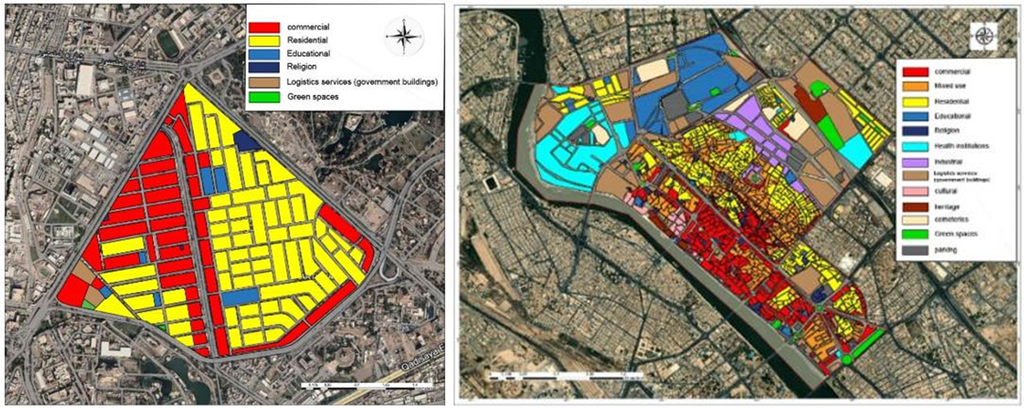
A Future Vision for Reforming Iraqi Cities
Addressing the challenges facing Iraqi cities cannot be achieved through individual projects or immediate solutions; rather, it requires adopting a comprehensive national vision that redefines the city’s role as an engine for economic, social, and environmental development. This necessitates transitioning from the crisis management approach to a long-term strategic planning methodology based on good governance, integration among sectoral policies, and enhancing the role of local governments, the private sector, and civil society.
This study proposes that the reform process of Iraqi cities be based on eight main pillars that together form a national framework for sustainable urban development:
Preparing a National Urban Policy
Iraq still lacks an integrated national urban policy that defines general directions for urban development and coordinates among ministries, governorates, and relevant stakeholders. This vacuum has led to multiple initiatives, scattered efforts, and the absence of a unified vision for city development.
Therefore, preparing the National Urban Policy of Iraq should represent the starting point in reforming cities, provided it includes a long-term vision up to the year 2050, measurable goals, performance indicators, and clear mechanisms for follow-up and evaluation, in line with the Sustainable Development Goals and the New Urban Agenda of the United Nations.
Reforming the Urban Governance System
Sustainable urban development cannot be achieved without efficient institutions that possess clear powers and operate within an integrated legislative framework. Therefore, the urban administration system should be reorganized through:
- Clearly defining the responsibilities of governmental institutions.
- Reducing overlap among ministries, governorates, and municipalities.
- Enhancing administrative and fiscal decentralization.
- Developing the institutional capacities of local governments.
- Adopting unified urban databases that support decision-making.
The study also proposes establishing the Supreme Council for Urban Development headed by the Prime Minister, to serve as the highest authority responsible for formulating urban policies, monitoring their implementation, coordinating efforts of ministries and governorates, and ensuring the integration of development projects at the national level.
Modernizing the Urban Planning System
Iraqi cities need to transition from traditional planning to flexible strategic planning capable of keeping pace with demographic, economic, and technological transformations. This includes:
- Periodically updating the master plans of all cities.
- Preparing regional structural plans linking cities to their surrounding areas.
- Protecting agricultural lands from urban encroachment.
- Adopting public-transit-oriented planning.
- Integrating geographic information systems (GIS) and artificial intelligence techniques into urban planning.
Developing Infrastructure and Sustainable Transport
Infrastructure represents the foundation of economic and urban development; therefore, a comprehensive national program should be implemented to modernize water, sewage, electricity, and telecommunications networks, while giving priority to developing the public transport system.
The study proposes that the program include:
- Establishing metro networks in major cities.
- Developing suburban commuter trains and regional linkages among cities.
- Implementing Bus Rapid Transit (BRT) systems.
- Improving pedestrian and bicycle infrastructure.
- Applying intelligent transportation systems and electronic traffic management.
These measures would reduce congestion, decrease emissions, raise city productivity, and improve the quality of life.
Addressing the Housing Crisis and Informal Settlements
Solving the housing crisis requires adopting a national housing policy based on increasing the supply of housing units, incentivizing investment, and expanding real estate financing programs, with priority given to affordable housing.
Regarding informal settlements, the study does not recommend comprehensive removal, but rather adopts the approach of upgrading and urban integration by improving infrastructure, regularizing legal status wherever possible, and involving residents in upgrading processes, ensuring the preservation of the social fabric and reducing intervention costs.
Enhancing the Urban Economy
Building productive cities requires diversifying the economic base and reducing reliance on the public sector, through:
- Establishing specialized economic zones.
- Supporting small and medium-sized enterprises (SMEs).
- Encouraging innovation and entrepreneurship.
- Investing in the digital economy and creative industries.
- Developing cultural and heritage tourism.
- Improving the business environment and simplifying investment procedures.
Successful cities are those that generate wealth, not only those that consume resources.
Enhancing Sustainability and Climate Resilience
In light of escalating climate change impacts, sustainability should become an integral part of urban development policies, via:
- Expanding green spaces.
- Protecting rivers and waterways.
- Improving waste management and recycling.
- Raising energy efficiency in buildings.
- Encouraging the use of renewable energy.
- Adopting climate-adaptive urban design solutions tailored to the local climate.
Disaster and climate crisis risk management plans should also be prepared, enhancing the capacity of cities to withstand future shocks.
Reforming the Legislative Framework
International experiences indicate that the success of urban development depends heavily on the existence of modern and clear legislation. Therefore, the study sees that Iraq needs a comprehensive review of laws related to urban planning, local administration, housing, investment, and the environment.
In this context, the researcher proposes drafting the Iraqi Cities Law to serve as a unified legislative framework regulating city management, defining the powers of various institutions, reinforcing principles of governance, sustainability, and community participation, and linking urban planning with economic, social, and environmental development.
Conclusions and Recommendations
First: Conclusions
This study reached a set of conclusions reflecting the nature of challenges facing Iraqi cities, summarized as follows:
- Iraqi cities are passing through a complex urban transition phase characterized by increasing demographic pressures and expanding urban spatial footprints, while the planning and management system has not kept pace with this transformation with the required speed and efficiency.
- Cities suffer from structural imbalances in infrastructure and basic services as a result of aging networks, weak maintenance, and the decline of urban investment over past decades.
- The housing crisis and informal settlements have become among the most prominent manifestations of urban dysfunction, as demand for housing exceeded the capacity of the state and the private sector to provide adequate housing units, leading to widespread land encroachments and the emergence of residential concentrations lacking minimum service standards.
- Urban transport constitutes one of the greatest challenges facing Iraqi cities due to excessive reliance on private vehicles and the absence of modern mass transit systems, with resulting traffic congestion, economic waste, and environmental pollution.
- Urban problems are closely linked to social realities, where unemployment, poverty, and internal migration have contributed to increasing pressure on cities and widening the gap among neighborhoods in terms of service levels and quality of life.
- The urban economy in Iraq relies heavily on government spending, while the role of the private sector, investment, and urban production remains limited, reducing the capacity of cities to create jobs and achieve sustainable economic development.
- Iraqi cities face escalating environmental challenges represented by air and water pollution, shrinking green spaces, high temperatures, and climate change impacts—challenges that necessitate integrating the environmental dimension into all urban development policies.
- The urban governance system suffers from a multiplicity of responsible bodies, overlapping powers, and weak institutional coordination, limiting the efficiency of planning, implementation, and follow-up.
- Iraqi cities lack a comprehensive national urban policy defining development priorities and linking urban planning with economic, social, and environmental development.
- Addressing urban problems cannot be achieved through sectoral or partial approaches; rather, it requires an integrated national vision based on reforming the governance system, updating legislation, strengthening strategic planning, and investing in people and cities together.
Second: Recommendations
Based on the study results, the researcher proposes adopting a set of strategic recommendations:
- Preparing the National Urban Policy of Iraq to serve as the supreme reference framework for urban development up to the year 2050.
- Establishing the Supreme Council for Urban Development headed by the Prime Minister to coordinate policies and projects among ministries and governorates.
- Periodically updating the master plans of all cities and linking them with economic, environmental, and social plans.
- Enacting the Iraqi Cities Law as a unified legislative framework regulating city management and reinforcing principles of governance and sustainability.
- Implementing a national program for infrastructure rehabilitation covering water, sewage, electricity, roads, and telecommunications networks.
- Developing an integrated public transport system relying on the metro, suburban commuter trains, Bus Rapid Transit, and intelligent transportation systems, while improving pedestrian and cycling environments.
- Adopting a national housing policy addressing the housing unit deficit, expanding real estate financing programs, and encouraging investment in affordable housing.
- Adopting a national program for informal settlements development based on rehabilitation and urban integration, while preserving the social fabric and guaranteeing residents’ rights.
- Diversifying the urban economy by supporting small and medium-sized enterprises, creative industries, the digital economy, and cultural tourism, enhancing job opportunities and raising city productivity.
- Protecting urban heritage and integrating it into local development plans, contributing to consolidating national identity and stimulating tourism and investment.
- Expanding green spaces, improving waste management, and adopting urban solutions to adapt to climate change and mitigate its impacts.
- Establishing a National Urban Observatory relying on modern databases and geographic information systems to monitor urban development indicators and support decision-making.
- Strengthening the participation of universities and research centers in preparing urban policies and evaluating projects, ensuring the utilization of scientific knowledge in city development.
- Expanding the participation of the private sector and civil society in city planning and management through clear and transparent institutional partnerships.
- Adopting measurable urban performance indicators and conducting periodic reviews of development programs to ensure goal achievement and course correction when necessary.
Conclusion
Iraqi cities stand today at a crossroads: either continue confronting their challenges through partial and fragmented remedies, or adopt a comprehensive national vision that transitions them from the stage of crisis management to the stage of shaping the future. Achieving this transformation undoubtedly requires political will, efficient institutions, modern legislation, and sustainable investment in people and place.
This study demonstrated that reforming Iraqi cities is not merely an urban project, but rather a national project to rebuild the state through cities that are more efficient, equitable, and sustainable. A city managed according to sound planning principles and effective governance becomes capable of attracting investment, stimulating economic growth, strengthening social cohesion, and improving the quality of life, making it a foundational pillar for achieving comprehensive national development.
References
First: Arabic References
- Central Statistical Organization. (2025). Results of the General Census of Population and Housing in Iraq 2024. Baghdad: Ministry of Planning.
- Iraqi Ministry of Planning. (2018). National Development Plan 2018–2022. Baghdad.
- Iraqi Ministry of Planning. (2024). National Spatial Development Strategy in Iraq. Baghdad.
- Mayoralty of Baghdad. (2023). Report on the State of Urban Services in the City of Baghdad. Baghdad.
- Ministry of Construction, Housing, Municipalities, and Public Works. (2022). Report on the Housing and Urban Development Sector. Baghdad.
- Central Statistical Organization. (2023). Annual Statistical Abstract. Baghdad.
- Iraqi Ministry of Environment. (2022). State of the Environment Report in Iraq. Baghdad.
- Ministry of Water Resources. (2023). Water Resources Report in Iraq. Baghdad.
- Iraqi Ministry of Transport. (2023). Transport Development Strategy in Iraq. Baghdad.
- Ministry of Labour and Social Affairs. (2023). Report on Poverty and Unemployment in Iraq. Baghdad.
Second: English References
- Asian Development Bank. (2023). Country Partnership Strategy: Iraq.
- Food and Agriculture Organization of the United Nations. (2023). Iraq Water Resources Assessment.
- Intergovernmental Panel on Climate Change. (2023). Sixth Assessment Report.
- Organisation for Economic Co-operation and Development. (2020). The Circular Economy in Cities and Regions. OECD Publishing.
- United Nations Human Settlements Programme. (2024). World Cities Report 2024.
- United Nations Human Settlements Programme. (2026). UN-Habitat Iraq Country Profile 2025–2029.
- United Nations. (2019). World Urbanization Prospects: The 2018 Revision.
- United Nations. (2024). World Population Prospects.
- United Nations Development Programme. (2024). Human Development Report.
- United Nations Environment Programme. (2022). Global Environment Outlook.
- World Bank. (2024). Iraq Economic Update.
- World Bank. (2024). World Development Indicators.
- World Bank. Urban Population – Iraq Database.
Disclaimer: The views and opinions expressed in this paper are solely those of the author and do not necessarily reflect the official policy or position of the Institute.