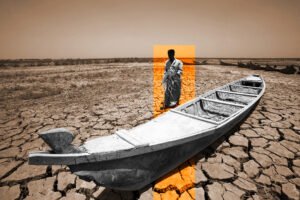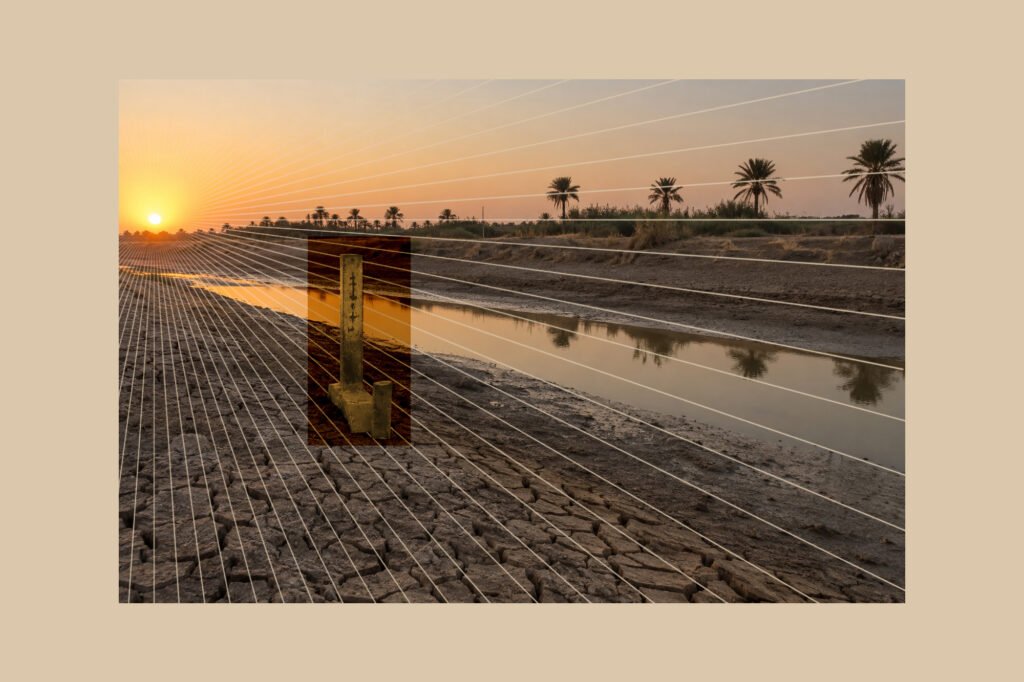
Climate change across the globe has become a tangible reality rather than a future projection. Its impacts are already manifesting directly across several river basins in the region. In Iraq, the greatest impact is clearly visible within the Tigris and Euphrates river basins and their tributaries. The decline in water yields across these two basins stems directly from several key factors: climate change, the execution of storage and irrigation projects by upstream riparian states without regard for downstream impacts on Iraq—contrary to international conventions stipulating that no harm should be caused to lower riparian states—and critical domestic challenges in internal water resource management.
The effects of climate change, which became clearly visible from 2015 onward, have now become extreme, causing severe flooding in some river basins while plunging others into acute drought. This reality has unfolded directly within the Tigris and Euphrates basins inside Iraq.
The broader toll of climate change on the region, and on Iraq in particular, will be very large. International reports rank Iraq among the five countries most vulnerable to these adverse impacts. We firmly believe that addressing these challenges requires concerted governmental, political, and societal focus in Iraq, alongside securing the necessary financial allocations, which have not been provided to date.
Findings from the Strategy for Water and Land Resources in Iraq, prepared by the Ministry of Water Resources in 2014, serve as an operational roadmap by providing a comprehensive assessment of water resources through 2035. This strategy built upon earlier baseline studies and concluded that Iraq requires $175 billion in financial allocations through its target year of 2035 across all government sectors and ministries utilizing water in their projects. Of this total, approximately $75 billion was earmarked directly for the Ministry of Water Resources to modernize and upgrade irrigation networks, rehabilitate and construct dams and barrages, and execute the strategy’s primary recommendations. In practice, given Iraq’s current economic indicators, allocating sums of this magnitude is unfeasible. The strategy should therefore be updated in light of the practical impossibility of securing such financial allocations under Iraq’s current economic conditions.
To confront these compounding challenges, we propose the following practical interventions:
First: Accelerate the transition from open-canal irrigation to closed, piped conveyance systems, beginning operational implementation immediately in downstream governorates, particularly in the central and southern regions, as they will suffer significantly and directly from climate-induced water scarcity. Piped conveyance can substantially improve water distribution, preserve water quality and volume for users at both the head and tail ends of the distribution network, ensure equitable allocation, prevent quota violations, and minimize evaporative losses inherent to open canals. It also expands arable land alongside numerous other operational benefits. Several neighboring countries, notably Turkey, have made major strides in this transition: between 2007 and 2015, Turkey allocated approximately $75 billion toward modernizing its conveyance infrastructure, successfully converting more than 80% of its network to closed pipes rather than open channels.
Second: Modernize municipal potable water supply infrastructure and enforce standard per capita consumption allocations based on geographic location. The standard daily per capita benchmarks are 240 liters in major urban centers, 200 liters in district and sub-district centers, and 130 liters in rural areas. In reality, average actual consumption across Iraq exceeds 550 liters per capita per day. This excessive rate is primarily driven by degraded municipal water distribution networks, resulting in massive water losses. The ministry’s 2014 strategic plan projected that domestic drinking and household consumption would reach 6.4 billion cubic meters annually by 2035 based on standard consumption baselines (240 liters in cities, 200 liters in towns, and 130 liters in rural areas). However, actual recorded consumption for domestic purposes reached 9 billion cubic meters in 2022 alone. Addressing this issue must be elevated to an urgent priority for decision-makers and relevant bodies, particularly provincial municipal directorates and the Baghdad Mayoralty, which hold institutional responsibility for municipal water provision across the country.
Third: Halt the direct discharge of untreated sewage, industrial effluents, and pollutants into river channels. According to Ministry of Environment data, an estimated 5 million cubic meters of untreated wastewater is discharged daily into the Tigris and Euphrates rivers. This practice poses a major hazard, with consequences becoming acute during periods of low flow, when river levels fall to critically low levels because of reduced water releases. This directly harms human health, agriculture, and virtually every aspect of life. Countries worldwide have established wastewater treatment frameworks to recycle treated effluent for productive use, foremost among them agriculture. Adequate financial allocations must be secured for local governments and relevant departments to install modern treatment plants, recycle wastewater, mitigate scarcity, and align national practices with international standards.
Fourth: Ensure the optimal and sustainable management of high-quality groundwater aquifers located across the governorates of Muthanna (Samawah), Najaf, Karbala, and Anbar, with strict protocols to prevent over-extraction. Well drilling must adhere strictly to scientific guidelines established by specialized departments within the Ministry of Water Resources. Unregulated drilling between 2003 and 2022 depleted an estimated 50% of available groundwater in Muthanna, with lower levels of depletion recorded in Najaf, Karbala, and Anbar. This alarming trend necessitates mandating modern irrigation technologies in such areas rather than relying on conventional surface-flood irrigation using groundwater from wells. Contrary to common media claims, Iraq does not possess vast renewable groundwater reserves; these deep, non-renewable aquifers formed over millions of years.
Fifth: Direct the Ministry of Agriculture to advance modern agronomic practices, provide subsidized inputs to farmers, and implement pilot programs to build trust in modern farming methods. Expanding cultivated acreage under current methods depresses crop yields and accelerates water waste. Agricultural policy must instead focus on relatively small areas capable of producing high yields where water quotas can be reliably delivered. This approach is widely adopted globally and across neighboring countries. Furthermore, the ministry must actively encourage the cultivation of salt-tolerant crop varieties to leverage Iraq’s brackish groundwater reserves.
Sixth: Capitalize on brackish groundwater reserves present across most Iraqi governorates. Total dissolved solids (TDS) in these reserves frequently reach 10,000 to 15,000 parts per million (ppm), representing salinity levels unsuitable for direct agricultural use or human consumption. Nevertheless, these reserves offer viable alternative water sources, particularly across central and southern governorates, by drilling brackish wells coupled with localized desalination units to supply drinking water for populations and livestock, as well as for agricultural areas designated for cultivation during periods of severe water scarcity. Local governments should actively procure brackish water desalination systems, given that treating brackish groundwater is technically and economically less demanding than seawater desalination.
Seventh: Prioritize the construction of water harvesting dams across Iraq’s western, northern, southern, and eastern desert basins to capture flash-flood waters arriving from neighboring countries. Harvesting seasonal surface runoff relieves abstraction pressure on main river systems and their branches, stabilizes local populations, recharges shallow groundwater, and improves security across remote rural border zones lacking basic services.
Eighth: Complete the strategic water storage and hydraulic regulation network of dams and barrages, prioritizing the construction of a storage dam north of the Samarra Barrage in the Makhoul Hills area. This reservoir would regulate seasonal floodwaters without requiring their total diversion into Lake Tharthar, where diverted flows suffer from severe evaporative losses and high salinity levels. A dam at Makhoul would also protect Baghdad from major flood risks, mitigating vulnerabilities stemming from the aging Samarra Barrage, constructed in the 1950s, and the absence of any intermediate flood-control structures along the river reach between Mosul Dam in Nineveh and Samarra Barrage in Saladin. Concurrently, decision-makers must sustain technical negotiations with upstream riparian states on the Tigris and Euphrates and leverage all diplomatic instruments to secure binding agreements on water allocations that protect Iraq’s national interests.
Ninth: Institutionalize water conservation principles and eliminate waste through coordinated campaigns led by local provincial governments, relevant ministries, and specialized international organizations. Broad public awareness campaigns should specifically target the agricultural sector as the nation’s largest water consumer. The government must actively encourage farmers to adopt modern irrigation systems by subsidizing equipment costs and implementing pilot farms equipped with modern irrigation technologies.
Tenth: Overhaul the state agricultural subsidy framework for water-intensive staple crops, notably wheat, barley, and paddy rice. The current system relies on dual subsidies: purchasing wheat from farmers at prices substantially above global market levels to incentivize domestic production, alongside providing subsidized seeds and pesticides. This procurement mechanism, which dates back to the sanctions era of the 1990s, must be comprehensively revised to prevent the over-allocation of water quotas, particularly during drought periods. Government support should instead shift toward subsidizing other widely cultivated crops that require less water and protecting domestic agricultural production.
Eleventh: Establish joint coordination between the Ministry of Agriculture and the Ministry of Water Resources to implement climate-smart agriculture, integrating remote sensing systems, early warning networks, and artificial intelligence tools to estimate water requirements.
Twelfth: Intensify technical diplomacy and sustain bilateral working groups with riparian states sharing the Tigris and Euphrates basins, specifically Turkey, Syria, and the Islamic Republic of Iran. Iraqi engagement should employ hydro-diplomacy to establish binding legal agreements on transboundary water allocations that prevent harm to lower riparian states, in accordance with established international water law and relevant United Nations conventions. As the downstream riparian state, Iraq’s water entitlements must be given the utmost consideration.
Thirteenth: Address structural electricity shortfalls by supporting the Ministry of Water Resources in introducing solar energy systems across most of its projects to meet irrigation requirements.
Disclaimer: The views and opinions expressed in this paper are solely those of the author and do not necessarily reflect the official policy or position of the Institute.