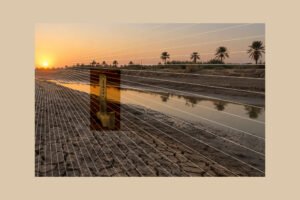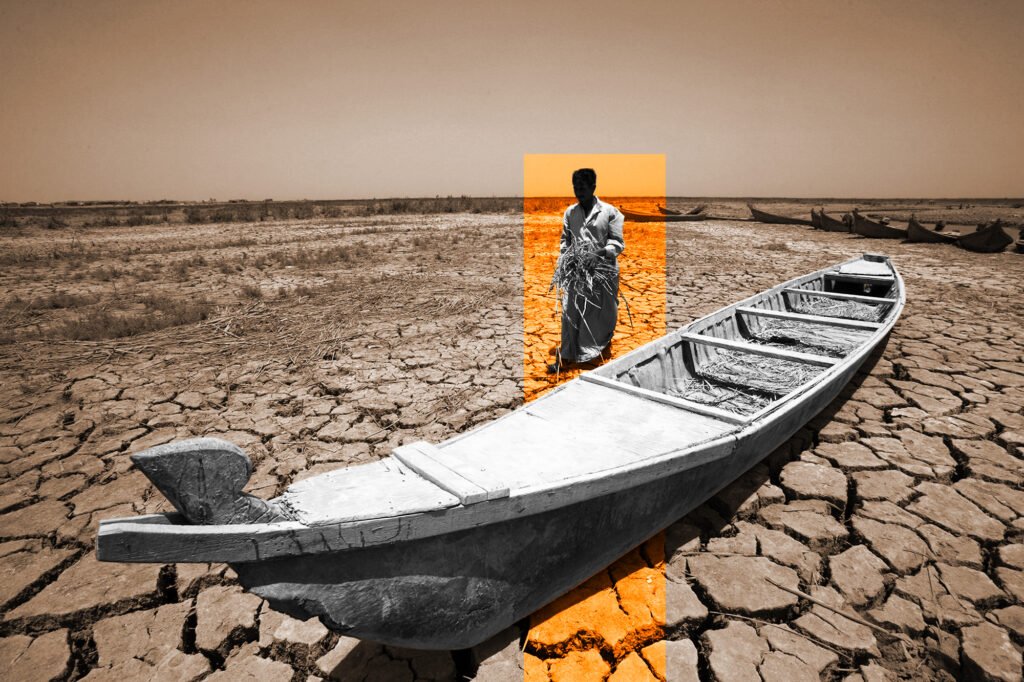
Iraqi authorities describe the water crisis experienced by Iraq in recent years as the most serious in decades, and even consider it the worst in nearly eighty years. This description is not limited to political or media discourse; it is confirmed by field indicators related to the drop in water storage, the decline in inflows coming from upstream countries, the expansion of desertification, the shrinkage of agricultural lands, and the deterioration of the ecosystem in large areas of the country. What increases the gravity of the situation is that this crisis no longer appears to be an exceptional circumstance or a passing season of drought of the kind Iraq has known throughout its long history; instead, it is taking on a structural character that is likely to continue and perhaps worsen in light of global climate changes and increasing regional challenges.
Consequently, the question arises: Does the current crisis represent just another episode in the series of climatic cycles that Iraq has known for thousands of years, or are we facing a historical transformation that places Mesopotamia before a radically different water reality? Is the catastrophic situation that Iraq is experiencing today due exclusively to the rise in temperatures—which approached forty-nine degrees Celsius in Baghdad and exceeded fifty degrees in several southern governorates in recent years—and to the decline in rainfall averages, or is it the result of a long accumulation of intertwined structural, political, economic, and administrative factors? These include the poor management of water resources, chronic disputes with Türkiye, Iran, and Syria regarding the sharing of the waters of the Tigris, Euphrates, and their tributaries, weak strategic planning, delays in modernizing irrigation networks, and the absence of policies capable of helping rural communities adapt to rapid environmental shifts.
These questions gain greater importance when considering that during the recent rainy season, Iraq witnessed relatively better rainfall than in previous years. Despite this, the levels of the Tigris and Euphrates rivers continued to decline, and water storage remained at worrying levels. This indicates that rainfall, no matter how much it improves in some seasons, is no longer the sole decisive factor in determining the country’s water situation, as inflows coming from upstream countries, alongside domestic water management patterns, have become the most influential factors in the future of Iraqi water security.
Added to this is the poor technical management of water, as well as corruption that has allowed dozens of unlawful entities to seize large quantities of water to feed unlicensed artificial fish farms spreading on both banks of the Tigris and Euphrates. A portion of these farms belongs to armed factions or influential clans, while other groups manage similar projects outside legal and regulatory frameworks. Field data also indicates that some of these activities provided, directly or indirectly, sources of funding or support for a number of takfiri-jihadist movements in some areas of western and northern Iraq during different stages of security instability.
For a country whose economy relies mainly on the oil and agricultural sectors—noting that agriculture represented in past decades one of the most important pillars of the Iraqi economy before its contribution declined today to approximately five percent of the Gross Domestic Product (GDP)—the continuation of the water crisis without a fundamental solution threatens not only food security, but also the social, economic, and cultural balances upon which Mesopotamia was built over thousands of years. Iraq is not facing just a water shortage crisis today; it faces a challenge that affects the model of stability upon which its agricultural and rural societies were founded, and raises fundamental questions about the state’s relationship with natural resources and the capacity of the political system to manage one of the most sensitive files for the future of the country.
The Impact of the Crisis on Agriculture and Cultural Heritage
The water crisis in Iraq includes a wide range of interconnected environmental, economic, and social phenomena, such that it can no longer be explained by a single factor or reduced to the decline in rainfall averages alone. Iraq is originally located within the arid and semi-arid belt and has faced increasing climate pressures for decades; however, recent years have witnessed a clear acceleration in these transformations, whether in terms of rising temperatures, increased evaporation rates, the decline in water inflows coming from outside the borders, or growing human pressures on water resources.
Rainfall remains limited by its nature, and high temperatures lead to the evaporation of massive quantities of water. Annual evaporation rates range between approximately 1,900 mm in northern Iraq and more than 3,500 mm in the southern regions, which are among the highest rates in the Middle East. As for groundwater, despite its importance, it remains limited, and a large part of it, especially in the southern governorates, is characterized by high salinity, making it unsuitable for human consumption or agriculture without expensive treatment processes. In other areas, it can be utilized after treatment, but it does not represent a real alternative to the surface resources that Mesopotamia has relied upon for thousands of years.
On the other hand, the major dam projects established by Türkiye and Iran, in addition to water installations in Syria, have contributed to a gradual reduction in the quantities of water reaching Iraq. Most studies indicate that the water flows of the Tigris and Euphrates rivers may decline significantly during the coming decades if current policies continue, which threatens the loss of a large part of irrigated agricultural lands and places Iraqi food security before unprecedented challenges.
The Iraqi Ministry of Water Resources had warned in 2021 of the possibility that the Tigris and Euphrates rivers inside Iraq could reach critical levels by 2040. However, developments in recent years suggest that this scenario may occur sooner, as the decline in water inflows has accelerated far beyond previous expectations. Concern is no longer limited to the distant future; it has become part of the daily reality experienced by the country, especially with the repeated decline in strategic storage and the continuous drop in river levels, despite the relative improvement in the rainy season this year.
The agricultural sector is the first to be affected by this crisis. Although the contribution of agriculture to the GDP no longer exceeds three to five percent, it still represents the main source of livelihood for about a third of the rural population, and directly or indirectly secures the means of life for approximately 28 percent of Iraqis. Therefore, the decline of agriculture is not just an economic loss; it reflects on the social structure, on demographic stability, and on the continuation of rural communities themselves.
Within just a few years, Iraq transitioned from a country famous for producing grains, dates, fruits, and vegetables—and even exporting a part of them abroad—into a country that relies increasingly on imports to secure its basic food needs, or achieves limited self-sufficiency thanks to state intervention through expensive support programs. This transformation reflects the declined productive capacity of the agricultural sector, but it also reveals the scale of the pressures that the water crisis has come to exert on the national economy.
For example, during the year 2024, the Iraqi state allocated large sums to support local wheat production, by purchasing the crop from farmers at prices that exceed global prices by about double, then reselling it to mills at subsidized prices below the global market price. This policy helped boost local production, but at the same time, it opened a wide debate about the sustainability of a model that relies on consuming huge quantities of water to produce crops that need major financial support, at a time when water resources are continuously declining.
Taking into account that the agricultural sector consumes about eighty percent of the available water in Iraq, the question is no longer related to how to increase agricultural production only, but also to how to achieve a balance between food security and water security. The real challenge facing Iraq during the coming decades will not be only in producing more crops, but in producing them with higher water efficiency, adopting modern irrigation techniques, and reconsidering the crop composition in line with the reality of water scarcity.
In this context, it is not enough to explain the continuation of agricultural support by the need to provide job opportunities or achieve food sufficiency. Agricultural policies in Iraq are also influenced by the nature of the political system, local balances, and social and electoral considerations that drive successive governments to adopt short-term solutions, even when they conflict with the requirements of sustainable management of natural resources. Therefore, the water crisis appears, more than ever, as a test of the capacity of the Iraqi state to reconcile economic and social imperatives on one hand, and the requirements of sound management of limited resources on the other.
Given that agriculture consumes approximately eighty percent of the available water resources in Iraq, it becomes legitimate to question whether the current agricultural model is sustainable over the long term. Can Iraq continue to support an agricultural sector that consumes most of its water resources at a time when inflows coming from the Tigris and Euphrates decline year after year? Can the expansion in cultivating water-intensive crops continue without a comprehensive review of agricultural and water policies?
Iraqi governments usually justify this approach by the need to protect food security, reduce reliance on imports, and maintain job opportunities in the countryside. These are undoubtedly legitimate goals, but they alone are not enough to explain the nature of the choices made by the state during the past two decades, nor do they explain the continuation of some policies even after their negative effects on water resources became apparent.
To understand the crisis, it must be placed in the context of the nature of the Iraqi political system after 2003. The continuous competition among political forces over the administration of the state and governorates, and the desire to maintain their social and electoral bases, often drives a preference for quick and immediate solutions at the expense of long-term planning. Public resources, including water, become part of the system of political and economic balances, instead of being subject exclusively to criteria of scientific management and sustainability.
In this context, the influence of a number of armed factions expanded inside state institutions and the economy during the past two decades, and their investments expanded in multiple sectors, including agriculture, food industries, transport, and trade. This phenomenon does not differ much from the expansion of investments by other political, economic, and tribal forces, which made the management of natural resources, primarily water, gradually interlock with networks of economic and political influence.
Numerous data indicate that a number of fish farming projects, large farms, and rice cultivation projects that heavily consume water have become linked to the interests of influential forces that enjoy a capacity to obtain water in a manner that exceeds what legal regulations or government plans allow. Thus, water is not always distributed according to agricultural needs or environmental considerations; instead, it has become, in many cases, part of local balances of power.
Hence, the water crisis in Iraq is not just a natural resource crisis, but also a crisis of governance and public administration. When the state’s capacity to enforce the law equally weakens, natural resources become vulnerable to unregulated competition, and access to water, like access to land or public contracts, becomes subject in varying degrees to balances of influence more than to criteria of justice and efficiency.
In reality, water in Iraq has not been just an economic resource; it has formed throughout history one of the most important tools for organizing society and the state. Since the civilizations of Mesopotamia, the legitimacy of authority was linked to its capacity to organize irrigation, maintain dams and canals, and guarantee the distribution of water among agricultural areas. Therefore, controlling water was not a technical matter only, but was always part of the exercise of authority itself.
Iraqi historical experience confirms that water was, in many stages, a means to strengthen loyalties or exert political pressures. The example of the Marshes after the 1991 uprising stands out as one of the clearest examples, as large areas of the Marshes were subjected to systematic drying, which led to the destruction of a lifestyle that was thousands of years old and drove tens of thousands of its inhabitants to displace. The process of re-flooding parts of the Marshes did not begin until after 2003, but it remained linked to fluctuations in water inflows and government policies, making this unique ecosystem vulnerable to repeated crises to this day.
Since 2011, and after the end of the US military presence, successive Iraqi governments announced dozens of plans and projects related to water management, developing irrigation systems, and building dams and reservoirs. However, most of these projects remained on paper, or were executed partially, due to weak funding sometimes, administrative complexities, political competition, corruption, and instability of government priorities. The execution of some projects did not begin until recent years, driven by increasing social pressures and expanding popular protests, especially since the Basra protests in 2018 then the protests in Baghdad and the central and southern governorates in 2019, when public services, primarily water, became one of the most prominent topics of public debate.
Poor Management and Imbalances in Water Governance
Iraqi farmers, especially small producers, suffer from weak financial capabilities that prevent their transition to modern water-saving technologies, such as drip irrigation or smart irrigation systems, or replacing crops that consume more water with other crops more suitable for the new climatic conditions. Therefore, many of them find themselves with limited options, driving them sometimes to search for temporary solutions, or to resort to illegal practices to guarantee the continuation of their agricultural activity.
Among these practices is altering watercourses in an irregular manner, establishing private outlets to draw water from public rivers and canals, drilling wells without official permits, or resorting to specialized local networks to divert water toward agricultural lands and fish farming projects. These phenomena spread in varying degrees across most Iraqi governorates, reflecting weak government oversight and an inability to manage a resource that has become scarcer than ever before.
The fish farming sector has witnessed since 2003 an unprecedented expansion, whether within river streams or through the establishment of thousands of artificial basins that deplete huge quantities of water. Estimates indicate that a large percentage of these projects operate outside legal frameworks, or do not comply with the required environmental and technical conditions. The problem is no longer limited to water consumption, but has extended to polluting rivers, weakening water quality, and harming the environmental balance in many areas.
When authorities resort to removing some unlicensed basins, or preventing the cultivation of certain crops during years of water scarcity, different forms of local resistance appear. Some farmers resort to establishing temporary earthen dams, changing watercourses randomly, or restarting projects that were previously closed. These practices reveal the absence of mutual trust between the state and the countryside, and show that addressing the crisis cannot be limited to security or administrative measures alone, but also needs economic and social policies that compensate farmers for the losses they bear.
The crisis reached a very dangerous level during the years 2025 and 2026, after Iraq recorded one of the lowest water storage levels in decades. The Ministry of Water Resources was forced to reduce water releases in an unprecedented manner, and many local governments canceled the summer agricultural season or imposed strict restrictions on cultivating a number of crops. This was not the result of drought alone, but the result of the convergence of several factors, including the decline in water inflows, rising temperatures, the continuation of high evaporation rates, and growing local demand for water.
In Basra Governorate, water salinity reached levels that directly affected drinking water, agriculture, and the palm groves that form part of the historical identity of the region. Other governorates also witnessed a sharp decline in river and reservoir levels, which reflected on electricity production, livestock breeding, and agricultural activity in general.
However, the most dangerous part of this crisis is not represented in the loss of an agricultural season or a decline in the production of a specific crop, but in the deep social transformations that have begun to accompany it. When rural families are forced to leave their villages due to water scarcity, they do not lose their source of income only; they lose a whole pattern of life, social relations, and agricultural knowledge accumulated over long generations. Migration here is not just a geographical movement, but a transformation that changes the human relationship with the land, the environment, and society.
The Iraqi Marshes are the clearest example of these transformations. This region, which UNESCO included in the World Heritage List in 2016, does not represent just a water space or a unique ecosystem; it represents one of the oldest continuously inhabited environments in human history. During recent years, it has suffered from a sharp decline in water levels, and large areas of it returned to dryness, threatening the continuity of local communities whose existence has been linked to water for thousands of years.
The Marshes include an exceptional ecosystem at the level of the Middle East and Eurasia, in terms of animal and plant diversity, and they host a unique water culture whose roots go back to the beginnings of the Sumerian civilization. Throughout history, the Marshes were not a natural space only, but also formed an independent social, economic, and cultural system within which special patterns of housing, movement, fishing, water buffalo breeding, and social relations developed.
This heritage gains additional importance because it also forms the first environmental line of defense for a number of the most important archaeological sites in southern Iraq, such as Ur, Uruk, and Eridu, as the humidity provided by the Marshes and the surrounding vegetation limited the encroachment of sands and dust storms. Today, however, the receding of water threatens these historical sites increasingly, making them more vulnerable to erosion and harsh climatic factors.
The International Organization for Migration (IOM) uses the concept of climate migration to describe what Iraq has witnessed during recent years. It is not mainly about external migrations, but about continuous waves of internal displacement during which thousands of families move from villages and countrysides to major cities in search of new sources of livelihood. Drought waves alone during the year 2023 led to the displacement of tens of thousands of people from the central and southern governorates, and indicators suggest that this phenomenon is likely to expand if the water crisis continues at current rates.
Therefore, the loss of water does not mean only the loss of a natural resource, but may also mean the loss of one of the most important historical and cultural components upon which Mesopotamia was built. The gradual disappearance of the countryside does not lead to a shrinkage of agricultural production only, but also results in the erosion of social memory, the severing of the link between humans and their environment, and the disappearance of patterns of local knowledge accumulated over thousands of years, which are losses difficult to compensate even if water returns in the future.
Need for Modernization and Law Enforcement
If climate changes and geographical factors explain an important side of the water crisis in Iraq, they are not enough alone to understand the scale of deterioration the country has reached during recent years. International experiences show that many countries located within arid and semi-arid regions, or relying on trans-boundary rivers, were able to limit the effects of water scarcity through long-term planning, investment in infrastructure, developing irrigation techniques, and adopting strict policies to manage natural resources. In Iraq, however, climate pressures coincided with deep imbalances in governance, making the effects of the crisis more severe and widespread.
During more than two decades, public policies allowed, directly or indirectly, the expansion of agricultural and consumer activities that deplete large quantities of water, without this being met by a real update of irrigation networks, or imposing effective control on illegal uses, or developing an integrated national strategy to manage water resources. The state did not begin to take stricter measures, such as reducing agricultural areas or removing some unlicensed fish farming projects, until the crisis reached unprecedented levels.
In southern Iraq, the effects of this delay seem more apparent. Agricultural crops are retreating year after year, and large numbers of palm groves lost their productive capacity, while instances of fish die-offs, high soil and water salinity recur, and livestock numbers decline, in parallel with increased rates of poverty and migration from the countryside to the cities. The crisis is no longer confined to the agricultural sector, but has come to touch the entire economic and social structure of the southern governorates.
These developments raise a fundamental question related to the nature of public service itself. Obtaining clean drinking water should be one of the simplest functions of the modern state, yet a large part of Iraqis still suffers from repeated cuts in water or from the poor quality of its nature. Data indicates that an important percentage of the rural population, and even sectors of city residents, are not reached regularly by water through public networks, and the water that arrives is often polluted or needs additional treatment before use.
This reality is linked not to water scarcity alone, but also to the state of the infrastructure that was subjected over long decades to neglect, then to depletion after 2003. An important part of water transport networks goes back to past decades and suffers from high rates of loss and leakage, while government investments did not keep pace with rapid population growth or the major urban expansion witnessed by Iraqi cities during the last two decades.
Also, the unregulated expansion in residential, industrial, and agricultural projects, in addition to the continuous encroachments on water networks, led to increased pressures on a system that was originally suffering from weak efficiency. Matching data indicates that a number of agricultural, real estate, and industrial projects obtain water through illegal connection to public networks or through changing the courses of rivers and canals, which increases the imbalance of water distribution among different areas.
On the other hand, the absence of transparency in managing water resources weakens citizens’ trust in public institutions. Decisions to ration water, cut it, or redistribute it are not always based, in the view of the population, on clear and announced criteria, which opens the way for rumors and fuels a sense of injustice, especially in governorates that suffer from a chronic shortage of water.
Many studies argue that administrative and financial corruption is not limited in its effect to wasting public funds, but also extends to undermining the efficiency of managing natural resources. The disruption of projects, delay in completing dams and reservoirs, weak maintenance of irrigation networks, and non-application of environmental laws are all factors that contributed to deepening the crisis, making Iraq less capable of adapting to rapid climate transformations.
Hence, it seems that addressing the water crisis cannot succeed if attention is limited to building dams, updating canals, or importing new technologies. These measures remain necessary, but they will not achieve the desired results unless accompanied by a broader reform process for the governance system itself. This process must be based on strengthening the rule of law, improving the efficiency of public administration, limiting corruption, and subjecting the management of natural resources to scientific and institutional criteria far from political pressures and narrow interests.
The water crisis in Iraq reveals, in the end, that climate change does not make disasters alone, but the scale of the disaster is also determined by the state’s capacity to manage it. The more efficient and transparent institutions are, the more the community’s capacity to adapt to scarcity increases. As for when environmental pressures coincide with weak governance, the natural resource turns quickly into a source of social, economic, and political crises.
Türkiye: The Hydraulic State
Modernizing infrastructure alone is not enough to face the water crisis, despite its importance; rather, it should be accompanied by updating the legislative framework, and providing institutions capable of applying the law in a fair and equal manner to everyone. Iraqi legislation related to protecting water resources is not minor, yet the basic problem lies in weak implementation, in the limited capacity of the state to enforce the law in different regions, and in the interlocking of political and economic considerations with administrative decisions.
This problem appears clearly in the file of wastewater treatment. Many treatment plants do not work at full capacity, while large quantities of polluted water are thrown into rivers and water canals without sufficient treatment. Also, industrial facilities, agricultural projects, and individuals continue to dispose of liquid and solid waste inside watercourses, which leads to the deterioration of water quality, increases the cost of its treatment, and multiplies health and environmental dangers.
Iraqi experience during the past two decades indicates that weak law application is no less dangerous than the water shortage itself. Every cubic meter of water wasted or polluted due to the absence of oversight represents a double loss in a country whose water resources have become continuously declining.
On the other hand, Iraq’s capacity to defend its water rights in the face of upstream countries does not rely only on the strength of its legal or historical arguments, but also on the cohesion of its internal institutions. The more stable the state is and the more capable it is of managing its resources efficiently, the more its capacity to negotiate with its neighbors from a stronger position increases. As for when institutions suffer from division and weak coordination, the margin of maneuver in regional files becomes more limited.
Also, the interlocking of regional economic and political interests with the Iraqi reality makes the water file more complex than a mere technical dispute over water shares. It interlocks with energy, trade, security, borders, and regional influence, which makes any Iraqi water policy in need of a long-term diplomatic and strategic vision, and not just administrative measures.
Türkiye is today the most influential actor in the future of Iraqi water, not only because it controls the sources of the Tigris and Euphrates rivers, but because it succeeded, over approximately a century, in building an integrated water policy that made water one of the most important elements of its developmental and strategic project.
Since the early decades of the Turkish Republic, water was not viewed as a natural resource only, but as a pillar for building the modern state, achieving agricultural and industrial development, strengthening national security, and reshaping the economic geography of Southeastern Anatolia.
This approach was embodied in a series of giant projects, such as the Keban Dam, Karakaya Dam, and Atatürk Dam, reaching the Southeastern Anatolia Project (GAP), which is one of the largest water development projects in the world, and includes twenty-two dams, nineteen hydroelectric stations, in addition to wide irrigation networks that radically changed the nature of the region.
Therefore, describing Türkiye as a “hydraulic state” does not carry a rhetorical dimension, but reflects the reality that water management has become part of the philosophy of the modern Turkish state. Water there is no longer a mere environmental resource, but a tool for development, energy, food security, and foreign policy.
For Iraq, any reduction in water releases from Türkiye reflects directly on agriculture, electricity production, strategic storage, water quality, and even on social stability in the southern governorates. From here, the future of Iraqi water has become linked to a large degree to the nature of political and economic relations between Baghdad and Ankara.
Many studies argue that Türkiye views the Tigris and Euphrates rivers as trans-boundary rivers, and not international rivers, which is a legal distinction that gives it a wider margin in managing water resources inside its territory. In return, Iraq, like Syria, holds onto the principle of a fair and equitable sharing of water according to the rules of international law related to shared rivers.
Although Iraqi-Turkish relations witnessed progress during recent years in many files, especially trade, investments, and the Development Road project, the water file remained the most sensitive, because the interests of both sides do not always match, and because the demand for water is increasing inside Türkiye too as a result of population growth, agricultural expansion, and climate change.
It is likely that the importance of this file will increase during the coming decades, because water is poised to become one of the most important elements of regional negotiation, and perhaps one of the most prominent determinants of relations among the countries of the Arab Levant.
Iran and the Shatt al-Arab
If Türkiye controls the main course of the Tigris and Euphrates, Iran’s effect is concentrated especially on the eastern tributaries that feed Iraq, and on the rivers that discharge into the Shatt al-Arab, primarily the Karun, Karkheh, and a number of smaller tributaries.
During past decades, Iran established a large number of dams and water installations on these rivers, in line with its internal developmental priorities, which led to a decline in the quantities of water reaching Iraqi lands, especially in the governorates of Diyala and Basra.
The effect of these policies appears especially in the Shatt al-Arab, which represents the vital artery of southern Iraq. Every decline in the flow of freshwater allows the advancement of the saline tongue coming from the Arabian Gulf inland, which leads to the deterioration of water quality, the destruction of large areas of agricultural land, the weakening of palm groves, and threatening the biodiversity for which the region was famous over long centuries.
However, understanding Iranian water policy requires also realizing that Iran itself faces a worsening water crisis, which may be considered one of the most dangerous environmental crises in its modern history. Drought, excessive depletion of groundwater, population growth, and agricultural expansion are all factors that pushed the Iranian authorities to give priority to internal needs, which explains a side of their water policies, even if it does not ease their effects on Iraq.
Therefore, addressing this file cannot be based on the logic of confrontation alone, but requires building permanent negotiation mechanisms, and developing regional cooperation in areas of managing shared basins, exchanging hydrological data, early warning, and long-term planning. Water, more than ever before, has become an issue of shared regional security, and not just a bilateral file between two countries.
Disputes Related to Water Inside Iraq
The water crisis in Iraq is no longer limited to the decline of river levels or the retreat of agricultural production, but has begun to turn gradually into one of the most prominent sources of social, political, and security tension inside the country. The scarcer the resource becomes, the more competition over it increases, and the possibilities of its turning into a direct or indirect cause of local conflicts rise.
International experiences confirm that communities suffering from water stress do not usually enter into wars because of water alone, but water becomes a factor that worsens existing conflicts over land, authority, resources, identity, and economic opportunities. Iraq is not an exception to this rule; rather, it represents perhaps one of its clearest examples in the Middle East.
Water has become during recent years one of the factors present strongly in social protests, especially in the southern governorates, where the demands of the population are no longer limited to improving services, but have extended to demanding their right to obtain clean drinking water, protecting agriculture, and halting the deterioration of the local environment. The water crisis, alongside electricity, unemployment, and corruption, has become part of the public debate about the nature of the state and its capacity to perform its basic functions.
At the same time, local conflicts escalated between governorates, between districts and sub-districts, between clans, and between farmers and livestock breeders, over water shares, canal paths, and irrigation priorities. With the decline of water releases, each region became active in protecting its share, which led in some cases to establishing earthen barriers, changing watercourses, or preventing it from reaching areas located downstream of rivers and canals.
In rural environments, where the clan still represents one of the most important frameworks of social organization, these disputes can turn quickly into armed conflicts, especially when the state is unable to intervene as a neutral arbiter capable of enforcing the law. Field facts indicate that a number of tribal disputes witnessed by Iraq during recent years were linked, directly or indirectly, to the dispute over water, or over agricultural lands whose value rises whenever the scarcity of water increases.
However, these disputes no longer resemble the traditional disputes known to the Iraqi countryside in the past. Previously, disagreements revolved mostly around land boundaries or seasonal irrigation turns, within relatively stable customary systems. Today, they have come to interlock with economic shifts, the spread of weapons, and the weakness of state institutions, which makes containing them more difficult, and increases the possibilities of their turning into security crises.
Also, the increasing migration from the countryside to the cities adds a new dimension to the crisis. The movement of thousands of families to urban fringes does not lead only to pressure on public services, but changes the social balances inside cities, increases unemployment rates, and multiplies the demand for water, electricity, and housing, which makes the effects of the water crisis extend far from the agricultural areas themselves.
From here, water security is no longer an environmental or economic concept only, but has become part of the concept of national security. The state that fails to manage its water resources finds itself forced to face a connected series of crises: the retreat of agricultural production, high reliance on imports, the expansion of poverty, increased internal migration, the escalation of local conflicts, and the retreat of trust in public institutions. Thus, water turns from a natural resource into a factor that reshapes relations between the state and society.
The Oil and Water Relationship
The relationship between the oil and water sectors reveals one of the most paradoxical sides of the Iraqi economy. The state relies basically on oil revenues to finance its budget, while oil production itself needs large quantities of water. Thus, the resource that represents the source of national wealth has become dependent on another resource witnessing a continuous decline.
Estimates indicate that producing one barrel of oil requires, in different stages of extraction, the use of approximately three barrels of water, whether in injection operations inside oil reservoirs to maintain pressure, or in industrial treatment processes. This need increases in giant fields located in southern Iraq, where more than seventy percent of national oil production is concentrated.
For this reason, national and foreign oil companies have moved during recent years to develop projects for water desalination, establishing special networks to transport it, and benefiting from saline water or seawater in some industrial processes, with the aim of reducing pressure on the freshwater needed by the population and agriculture.
However, these solutions, despite their importance, do not eliminate the increasing competition among different uses of water. Every cubic meter allocated to the oil industry is a cubic meter that does not go to agriculture or to human consumption, which forces the Iraqi state to manage carefully the balance between two basic pillars of its economy: oil as the main source of revenues, and water as the necessary condition for the continuation of life and agricultural production.
In Basra Governorate, where the largest gathering of oilfields intersects with the areas of Iraq most exposed to salinity and water scarcity, this paradox seems clearer. The governorate that provides the major part of Iraq’s oil exports is itself among the governorates suffering most from the shortage of clean drinking water, the retreat of agriculture, and the deterioration of the local environment. This reveals a deep paradox in the Iraqi development model, where oil wealth does not always reflect on improving the management of natural resources or strengthening environmental security.
It is likely that the importance of this challenge will increase during the coming years, with the continuous rise in global demand for energy, and at the same time the escalation of pressures linked to climate change. Iraq will have to develop a new model that reconciles the requirements of the oil industry, preserving water resources, and protecting the environment, because separating these files is no longer possible under current climate and economic transformations.
Conclusion
The question of water in Iraq can turn, during the coming years and decades, into one of the most important factors that will reshape the political, social, and economic scene in the country. It is no longer a mere environmental issue, nor just a problem related to agriculture or public services; rather, it has become a sovereign issue touching the state’s capacity to continue performing its basic functions, maintaining the cohesion of society, and managing its strategic resources in a regional and international environment that increases in complexity.
The time when water could be viewed as a renewable natural resource that does not deplete has ended. Mesopotamia, whose civilization was established on the abundance of water, finds itself today before a new historical reality, represented in the transition from managing abundance to managing scarcity. This transformation does not force a review of water policies alone, but forces a fundamental rethinking of the economic model, agricultural policies, urban planning, and the relationship between the state and society.
In this context, regional transformations gain increasing importance. Türkiye has included water resource management within its major strategic vision, and linked it to its developmental projects and the “Development Road” project, which grants it a central position in the Levant. China also seeks to expand its presence in this field through its expertise in infrastructure and water resource management, while Iran faces a deep internal water crisis that limits its capacity to adjust its water policies toward Iraq, even if the political will for that were available.
However, reducing the crisis to its geopolitical dimension would be an oversimplification. Relations with upstream countries represent an important part of the problem, but they do not eliminate the responsibility of the Iraqi state to develop a more efficient and fair management of its water resources. Comparative experience shows that countries facing harsher climate conditions were able, thanks to long-term planning, investment in technology, law application, and rationalization of consumption, to reduce significantly the effects of water scarcity.
From here, reforming water management should begin from within, through building more efficient institutions, modernizing irrigation networks, reducing waste, combating encroachments on rivers and canals, and subjecting all users, individuals and institutions, to the same law, without exception. Also, agricultural policies should be reconsidered, encouraging crops that consume less water, expanding the use of modern irrigation techniques, and investing in water recycling and wastewater treatment, in line with international environmental standards.
The cultural dimension is no less important than the political and economic dimensions. Entire Iraqi generations grew up under the belief that water is a permanent resource that does not need careful management, while field facts today indicate that this perception is no longer valid. Building a new culture of conservation in using water, beginning from the school and not ending with government policies, will become a basic part of Iraqi national security during the coming decades.
At the same time, rural communities will have to adapt to a new reality that forces the development of agricultural production patterns, adopting more efficient techniques, and preserving what remains of the environmental and cultural diversity that shaped Mesopotamia’s identity over thousands of years. The disappearance of the countryside does not mean losing an economic sector only, but also means losing part of the social memory of Iraq, and the human heritage that made this country one of the oldest centers of civilization in the world.
The United Nations classifies Iraq among the world’s countries most exposed to the repercussions of climate change, a classification that does not reflect the future only, but describes a reality that has already begun to form. Heatwaves have become more severe, dust storms more frequent, desertification more expansive, and climate migration more present in the Iraqi scene. If these trends are not addressed with long-term policies, their effects will not be limited to the environment, but will extend to the economy, public health, education, social stability, and even to the nature of the political system itself.
In the end, the water crisis in Iraq is not an unalterable geographical destiny, nor is it the result of climate change alone. It is the outcome of a complex interaction among climate, geography, public policies, the nature of the state, regional shifts, and the developmental models that prevailed during past decades. Therefore, the future of Iraq’s water will not be settled in dams alone, nor in negotiations with neighboring countries alone, but in the capacity of the Iraqi state to build a new strategic vision that makes water the axis for sustainable development, for rebuilding trust between the state and society, and for guaranteeing the continuation of life in a land whose name has been linked, since the dawn of history, to the Tigris and Euphrates.
Disclaimer: The views and opinions expressed in this paper are solely those of the author and do not necessarily reflect the official policy or position of the Institute.