A nation’s foreign relations are no longer measured by the number of diplomatic missions or official visits, but by its ability to turn geographic location into economic value and political partnerships into investment and development. Today, Iraq’s foreign relations face a historic test: they will either remain a tool for managing political balances among regional axes, or become a lever for economic development and state-building.
Modern development is linked to a state’s ability to open up intelligently to global markets. Studies indicate that a 1% increase in a country’s openness to international trade is associated with a 0.9% to 2% increase in GDP per capita.
Trade openness does not mean flooding the domestic market with imported goods, but rather building a network of mutual interests that allows the state to export its products, attract capital, transfer technology, and expand its domestic production base toward sustainable development. The problem in Iraq has never been openness itself, but rather the unbalanced way in which it was pursued.
Therefore, as a country possessing the fundamentals required to return to manufacturing and production, Iraq’s foreign relations must not come at the expense of its national economy. Development and productivity should be Iraq’s primary drivers in building relations with other nations and the foundation for any future political rapprochement.
What happened after 2003, however, was that Iraq turned into a major consumer market for imported goods, especially from neighboring countries, without a corresponding real growth in national production, exports, or foreign investment. The Iraqi market was opened to foreign goods without sufficient protection for agriculture and industry, without an effective export policy, and without a clear link between foreign agreements and the national development plan.
Thus, Iraq’s foreign relations can be described as consumerist relations in which the country has become a market for others, importing goods and services while foreign currency earned from oil revenues flows abroad.
This consumerist model in foreign relations poses a real challenge to Baghdad, which aspires to transition toward productive relations. Should this goal be achieved, the outcome of these relations will be factories, projects, and employment opportunities that add real value to the Iraqi economy.
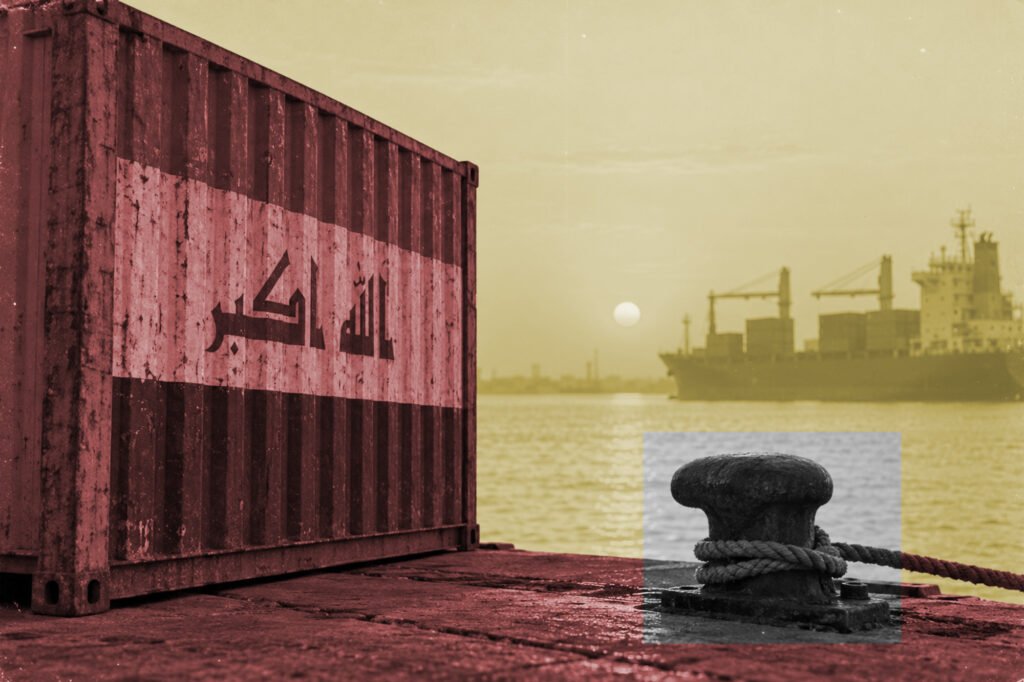
In recent years, Iraq has attempted to alter this pattern in its foreign relations by launching several projects, most notably the Development Road project. This initiative represents one of the most significant shifts in Iraqi strategic thinking, as it leverages Iraq’s geographic location as a vital asset to transform the country into a connectivity platform that lays the foundation for Iraq to become an economic power.
The project connects the Grand Faw Port to the Turkish border via a network of railways and highways, making Iraq a corridor between the Arab Gulf states, Turkey, and Europe. The Arab Gulf states possess energy resources and capital; Turkey and Europe represent markets and industrial capacity; while Iran, Syria, and Jordan provide regional depth, consumer markets, and alternative corridors. However, the success of this project requires a state capable of controlling weapons, combating corruption, protecting investors, streamlining bureaucratic procedures, and providing modern infrastructure.
Iraq appears to be moving in this direction; a quadrilateral memorandum of cooperation was signed in 2024 among Iraq, Turkey, Qatar, and the UAE, giving the Development Road project a regional dimension rather than a purely Iraqi one.
Based on these dynamics, Iraq’s foreign relations must be shaped by a combination of political and economic considerations, in line with the specific nature of ties with each partner.
Relations with the Arab Gulf States
Over the past two decades, relations with the Arab Gulf states have been marked by a degree of turbulence, apprehension, and caution. Following the end of the Iran–Iraq War, during which the Gulf states supported Iraq, relations gradually deteriorated, culminating in Saddam Hussein’s invasion of Kuwait.
With the fall of the Saddam regime in 2003, the Arab Gulf states felt unable to fill the vacuum that Iran subsequently occupied, leading them to adopt a policy of disengagement that weakened both political and economic ties with Iraq. However, these ties developed gradually, culminating under the government of Iraqi Prime Minister Mustafa Al-Kadhimi, who helped attract Gulf investments to Iraq and elevated diplomatic relations to the highest levels. Yet, this progress ran up against the influence of armed factions that worked to distort the image of this relationship.
Since then, the Arab Gulf states have continued to view Iraq as a strategic opportunity, but one lacking guarantees. The Gulf states possess the financial and investment capacity that Iraq needs, especially under current conditions of declining fiscal revenues. Iraqi Prime Minister Ali Al-Zaidi has expressed his desire to attract $50 billion in Gulf investments to the Iraqi market. However, the matter is not that simple. Although the Gulf states need Iraq as an alternative corridor away from the risks of the Strait of Hormuz, they view this prospect with caution, particularly given the absence of adequate Iraqi governmental guarantees, the presence of certain factions refusing to surrender their weapons, and persistent corruption that obstructs future investments.
Consequently, Iraqi–Gulf relations have largely been reduced to official visits and protocols rather than tangible projects, with limited exceptions such as the electrical interconnection project and clean energy investments.
Iraq nevertheless aspires to develop this relationship into major initiatives, including investment in associated gas, industrial zones, and food security projects, in addition to ports and logistics services. Therefore, the inclusion of both the UAE and Qatar in the Development Road memorandum represents an important shift in how the Arab Gulf states view Iraq: not merely as an oil-producing state, but as an economic corridor and an opportunity that must not be missed.
Relations with Turkey
Turkey is one of Iraq’s most important economic partners, but it is simultaneously a difficult negotiator across numerous issues, such as water, energy, and security. Therefore, relations with Ankara must transition from an unbalanced commercial dependence to a productive partnership. Bilateral trade reached $16.8 billion in 2025, with a trade surplus of nearly $8 billion in Turkey’s favor.
Turkey seeks to use Iraq as a gateway to the Arab Gulf, while Iraq relies on Turkey to export its crude oil through the Kirkuk–Ceyhan pipeline system to the Ceyhan export terminal and onward to European markets. Iraq also views Turkey as a potential gateway to Europe. Managing this equation effectively could produce a major partnership between the two nations. However, there is an Iraqi concern that this could result in a new form of dependency if Iraq remains merely a market for Turkish products. Furthermore, Turkey is an important and influential NATO member; maintaining a stable relationship with Ankara serves Iraq and allows it to develop a joint defense strategy based on security cooperation and coordination.
To expand cooperation on the basis of equal opportunity, a portion of Turkish commercial production should be relocated to Iraq, with the active engagement of both the Iraqi and Turkish private sectors in joint infrastructure projects. To achieve this, Iraqi diplomacy must reach fair understandings with Turkey regarding water, energy, and transport, ensuring the relationship becomes one of mutual benefit rather than perpetual importation.
Relations with Iran
Iran is one of the most influential states in Iraq politically, economically, and in security terms, having benefited from the Iraqi market’s need for electricity, gas, and consumer goods. Bilateral trade reached roughly $12 billion in 2025, with World Trade Organization data indicating that Iraq accounts for approximately 20.9% of Iranian exports. The trade balance clearly shows an asymmetrical relationship, as Iraqi exports to Iran remain extremely limited.
Iraq’s dependence on Iran for energy and trade closely resembles its dependence on Turkey, revealing a clear imbalance that affects these states’ policies and their handling of multiple issues.
Therefore, Iraq must work to resolve its energy file gradually in a way that allows it to achieve independence and self-reliance, particularly by reducing dependence on electricity and gas imported from Iran. In addition, tightening control over border crossings and preventing currency and goods smuggling, whether through Iran or Turkey, will be essential to protect the Iraqi economy and increase non-oil revenues from customs and taxes.
This would also establish a relationship based on partnership rather than viewing Iraq as an open market or an arena for influence. Shifting trade from a consumerist model to productive partnerships will have a positive impact on political relations among all these parties and lay the foundation for a more stable future in the region.
Relations with the United States and Europe
The United States and Europe possess important tools that Iraq may need in the coming phase. Technology, financing, and governance, along with clean energy, assistance in combating corruption, and developing the banking system, are fundamental pillars that Iraq needs as part of building state capacity. Energy, water, and defense projects stand at the forefront of cooperation between Iraq, the United States, and Europe, reflecting Iraq’s growing needs in these sectors.
However, relations with the West must not remain confined strictly to these areas. Relations with Washington have focused on security issues more than any other dimension. For this reason, Iraqi Prime Minister Ali Al-Zaidi recently announced that the scheduled withdrawal of Coalition forces from Iraq at the end of September 2026 requires the relationship with the United States to shift from a military focus to an economic and developmental partnership.
Iraq needs genuine support in reforming its banking system as a key component of its anti-corruption efforts. It also requires support in renewable energy projects, associated gas development, rebuilding infrastructure, improving education, and financing major initiatives. Iraq must also use its relationship with the West to improve its negotiating position with other partners, rather than joining one axis against another. A strong partner reinforces a state’s political standing and strengthens its economic position in relations with other nations.
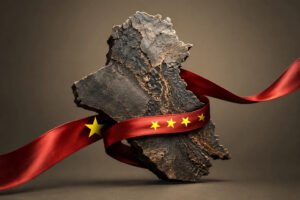
Relations with China
China is Iraq’s largest economic partner, particularly in the fields of energy and infrastructure. Crude oil and its derivatives make up more than 95% of Iraqi exports to China, reaching roughly $38 billion in 2024, compared to $16 billion in Chinese exports to Iraq during the same period, representing a trade surplus of around $22 billion in Iraq’s favor.
However, this surplus does not necessarily reflect economic strength, because its structure is based on exporting raw materials and importing high-value manufactured goods. Consequently, added value, technology, jobs, and innovation remain concentrated in the Chinese economy, while the Iraqi economy remains dependent on oil rents.
Furthermore, China views Iraq primarily through the lens of energy and large-scale projects. Iraq must therefore benefit from China in building infrastructure while avoiding falling into a pattern of unilateral dependence or unproductive debt.
If Iraq wants to benefit from its relationship with China, it must focus on projects of genuine economic viability that transfer expertise and technological know-how to its economy, steering clear of contracts that could turn into long-term financial obligations without productive returns. Although China is an important partner in numerous projects, this requires strong Iraqi governance and smart diplomacy that does not provoke other partners, but rather creates shared benefits for all.
Relations with Syria and Jordan
Syria’s gradual return to the regional scene opens a new discussion for Iraq regarding trade, energy, and transport corridors, particularly toward the Mediterranean Sea. Jordan also represents an important outlet through the Port of Aqaba. These routes still face major security, political, and financial challenges. Nevertheless, Iraq requires multiple outlets rather than relying on a single corridor. Conversely, both Syria and Jordan would benefit from any Iraqi oil pipelines traversing their territories, not only through transit revenues but also by strengthening their strategic standing in the global market.
Strengthening Iraq’s diplomatic relations with Syria and Jordan will therefore be an important factor not only for diversifying export routes, but also for reinforcing its own domestic security and stability, especially following Iraq’s restoration of security and influence along its western borders and its defeat of ISIS. Creating shared benefits among Iraq, Syria, and Jordan would establish an important strategic and logistical economic zone serving the European economy while bringing economic benefits, security, and stability to all three countries.
The preceding analysis demonstrates that expanding trade between Iraq, its regional neighbors, and other countries has not been the central axis of its foreign relations. In reality, what happens in Iraq is quite the opposite: trade with countries with which Iraq maintains economic ties is largely one-sided, where Iraq imports mostly non-productive goods and exports little beyond the foreign currency generated by its oil revenues, draining the Central Bank’s reserves that rely primarily on crude oil sales.
The Hormuz Crisis and the Fragility of the Economic Model
The crisis in the Strait of Hormuz demonstrated the urgent need to develop Iraq’s foreign policy so that the Iraqi economy can diversify its oil export outlets and maximize both its oil and non-oil revenues. Limited export corridors placed Iraq in an awkward position, especially during negotiations with Turkey over renewing the Kirkuk–Ceyhan pipeline agreement, which expires in late July 2026.
Ankara imposed difficult terms on Baghdad, taking advantage of Iraq’s financial needs and the decline in its oil exports. This vulnerability was also reflected in Iraq’s position within OPEC, where Baghdad demanded an increase in its production quota or threatened to withdraw from the organization, a move that could affect its political relations with influential OPEC members such as Saudi Arabia.
Thus, Iraq’s foreign policy is no longer a diplomatic luxury, especially since relations with its regional and international environment directly affect the national economy. In other words, foreign policy has become a direct component of Iraqi economic security and must be the instrument enabling its companies to sign contracts, benefit from expertise, and access new markets.
Balancing Interests
In recent years, Iraq has tried to stay away from bloc politics, avoid being drawn into political conflicts, and refrain from supporting one side at the expense of another. In fact, Iraq sought on more than one occasion to play the role of mediator, particularly regarding the Iranian nuclear file and communication with the international community.
However, this policy quickly turned into passive neutrality. By pursuing this approach, Iraq missed an important opportunity to create win-win outcomes for all parties. Instead of a policy of self-distancing, the focus should have been on maximizing interests. While it avoided turning into an arena for conflict, Iraq was unable to become an arena for investment or make its domestic stability a shared interest for everyone.
The Role of Embassies and Commercial Attachés
Throughout past years, Iraq has been unable to achieve notable rates of foreign capital inflows, despite the growing number of embassies opened abroad or diplomatic missions accredited to Baghdad. The primary reason for this lag in foreign investment is the lack of security and stability, alongside financial and administrative corruption; however, it also stems from the absence of effective diplomacy capable of attracting foreign capital to the national economy.
Despite the constant announcement of commercial agreements, they have served Iraq only to the extent of generating revenues for the budgets of other countries that sell their products to Iraq, capitalizing on an imbalance in trade payments that usually favors other nations.
To overcome this dilemma and build effective economic diplomacy, the role of Iraqi embassies must be redefined. Iraqi embassies today operate essentially as political offices and consulates performing traditional diplomatic and consular functions, but they are far from being economic platforms that work to attract companies, market opportunities, or follow up on agreements. In addition, many of these missions have overlooked the Iraqi private sector, failed to promote national exports, and made little contribution to repatriating qualified professionals capable of contributing to development.
Even when the Ministry of Foreign Affairs prepares meetings with its missions to organize investment forums in coordination with the National Investment Commission, its role remains largely organizational, without focusing on promotion or economic returns. Iraqi embassies and attachés lack indicators to evaluate their performance in terms of the volume of investment attracted, the number of firms brought into the market, the value of contracts facilitated, or the jobs created. As a result, Iraqi economic diplomacy remains a political and procedural activity rather than a measurable instrument of development.
Therefore, the Iraqi Ministry of Foreign Affairs must institute a series of indicators to monitor each embassy’s performance, such as tracking the number of companies attracted, the size of investments facilitated by the embassy or commercial attaché, and the commercial opportunities opened for the Iraqi private sector. In addition, these diplomatic institutions must play a major role in improving Iraq’s investment image, which has declined for various reasons over the years. Diplomacy that produces no economic return remains incomplete.
Iraq possesses substantial talent abroad, ranging from businesspeople and investors to physicians, engineers, and academics, but the state has not yet succeeded in converting these capabilities into economic soft power.
This can be achieved by establishing a national program that connects Iraqi professionals abroad with embassies, ministries, and the domestic private sector. The goal of this proposed program is not only to invite expatriates to return, but to turn them into economic ambassadors for Iraq in the countries where they reside.
Furthermore, the Iraqi private sector must be empowered to become a partner in foreign relations, rather than just a recipient of state decisions. The private sector is best equipped to build flexible trade and investment partnerships.
Combating Corruption as a Prerequisite for Successful Foreign Relations
While Iraq’s foreign relations work to enhance the state’s standing diplomatically and economically, the ability to attract foreign investment or build genuine economic partnerships cannot succeed without combating corruption. In 2026, Iraq witnessed a wave of arrests of officials and politicians as part of an anti-corruption campaign, reflecting a growing awareness that corruption is no longer merely an internal issue, but an obstacle to Iraq’s foreign relations and investment appeal.
This campaign garnered widespread international attention and must be sustained, particularly because investors fear not only security risks, but also bribery, legal ambiguity, fragmented decision-making centers, and uncontrolled weapons.
Strategic Recommendations
Iraq now has a rare opportunity to move beyond being merely an oil-exporting nation and become a regional hub for trade, energy, transport, and investment. However, this opportunity will not materialize by virtue of geography alone; it requires a cohesive political and economic vision based on the following recommendations:
- Adopt the National Development Plan as the Foundation for All External Agreements: The government should conclude trade or investment agreements in a way that serves the goals of production and economic diversification.
- Transform the Ministry of Foreign Affairs into an Economic Enabler: Activate commercial attachés and tie them directly to economic performance indicators.
- Rebalance Trade with Neighboring Countries: Encourage regional neighbors to manufacture inside Iraq and enforce measures to prevent market dumping.
- Link Strategic Projects to Common Interests: Develop projects that create shared interests for other states inside Iraq through a clear foreign policy, especially directed toward regional neighbors.
- Diversify Export and Transit Corridors: Adopt a foreign policy rooted in coordination with other states to diversify transport and export routes, avoiding reliance on a single outlet or corridor.
- Develop Relations with the Arab Gulf States as an Investment and Logistics Partnership: Move beyond purely political ties toward tangible investment and logistics cooperation.
- Manage Relations with Iran and Turkey on the Basis of Mutual Interests: Build ties based on reciprocity while systematically reducing unbalanced dependence.
- Leverage Relations with the United States and Europe for Institutional Reform: Utilize Western ties to reform the banking system, develop energy, improve education, and strengthen governance.
- Benefit from China in Infrastructure through Feasible, Transparent Contracts: Utilize Chinese capacity within clearly structured contracts that ensure economic viability.
- Establish a Supreme Council for Economic Diplomacy: Form a council bringing together the Ministries of Foreign Affairs, Planning, Trade, Transport, Oil, and Electricity, alongside the National Investment Commission and the private sector.
The experience of past years has shown that foreign relations remained detached from the developmental process, turning Iraq into a consumer market for others rather than establishing productive interests that make Iraq an indispensable partner.
From this perspective, the benchmark for successful foreign policy in the coming phase should not be the number of agreements signed, but rather the volume of incoming investment and the opportunities created, thereby enhancing Iraq’s capacity and resilience in the face of emerging crises.
Iraq must move from a neutral foreign policy toward a different, more productive foreign policy, one where every external relationship stems from internal needs and serves as a pathway for attracting investment and building the state within the framework of sustainable development.
Disclaimer: The views and opinions expressed in this paper are solely those of the author and do not necessarily reflect the official policy or position of the Institute.